That’s what happens when a medical practice moves from a bare-bones clearinghouse to a full claims management platform. Expect to see fewer rejected claims and faster payer turnaround. The software checks for errors before the claim is submitted, not after you receive a denial letter.
When buyers search for claims management software they often end up on clearinghouse comparison pages that only talk about routing and per claim fees. That’s a different matter. Routing is the core function of claims management software. Scrubbing rules, denial workflows, attachment handling and reporting are all layered on top of the routing.
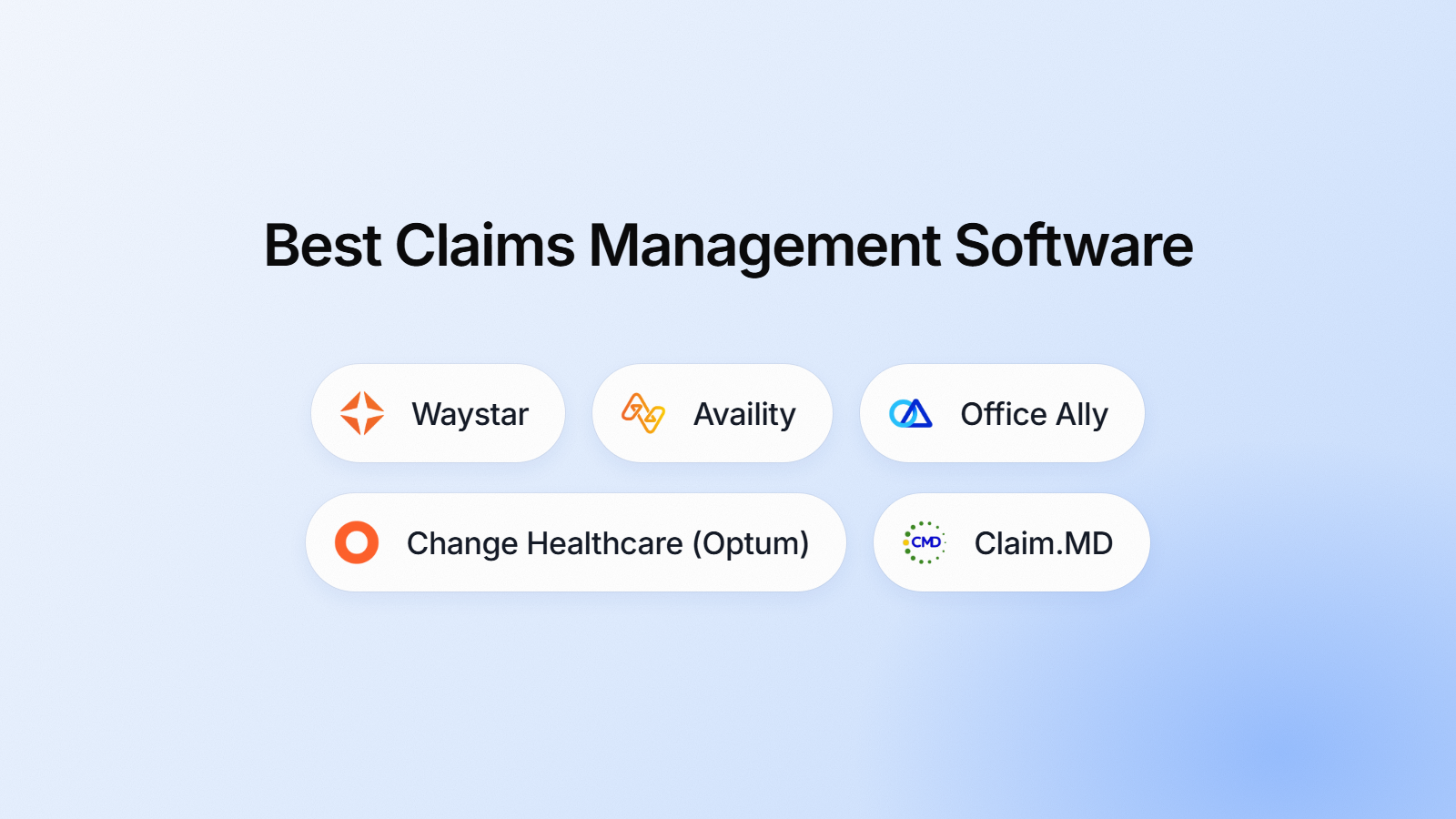
Top Claim Management Software for Medical Practices 2026: Waystar Availity Office Ally Change Healthcare (now part of Optum for Business) Claim.M.D. They work for different size practices, from solo billers who are watching every dollar to health systems that run thousands of claims a day.
This guide breaks down what each platform actually does, what it costs, and who should pick it.
What is Claims Management Software (Not Just Another Clearinghouse)
Instead of formatting claims for each payer separately, a clearinghouse provides a practice one connection to route claims to hundreds of payers with unified scrubbing and tracking. A clearinghouse is one connection that routes your claims to hundreds of payers with standard scrubbing and tracking. Direct payer submission is connecting to and formatting your claims for each individual payer.
Claims management software extends that. Usually, it includes denial forecasting, claim editing workgroups, prior authorisation tracking and attachment management, so billing staff can work from one dashboard instead of having to toggle between a clearinghouse portal and a separate RCM tool.
It’s the same question asked in different words on reddit billing forums by people looking into this. Is my clearinghouse enough or do I need something that actually prevents denials instead of just reporting them. The answer depends on the volume of claims and how much manual rework your staff is doing on rejected claims.
1. Waystar: Best for Integrated Revenue Cycle and Claims Tracking
Waystar
Waystar combines its clearinghouse services with a broader revenue cycle platform, rather than selling it as a standalone product. Waystar is a healthcare payments and revenue cycle management platform that integrates clearinghouse function into a broader unified system. Claim management runs on one database that handles claim submission, monitoring and payer connectivity, with tools for price transparency and patient financial experience.
Its claims manager is connected to a wide payer network and uses rule-based edits to catch and fix errors before they are submitted. Claims Management manages the entire claims life cycle – submission, scrubbing, editing, and real-time status tracking – and connects with 1,000+ payers. Rule-based pre-submission edits catch errors before they become denials.
On the eligibility side, Waystar does real-time and batch verification on commercial, Medicare and Medicaid plans, and integrates with most major PM/EHR systems to reduce manual front-desk lookups, which is key for practices tired of checking coverage by phone.
According to Capterra, Waystar’s average first-pass clean claims rate is 98.5+% . Claim Manager uses AI and RPA to predict the best times to status and appeal claims, create searchable e-versions of EOBs, automate Medicare workflows, and reconcile, split and post 95+% of payer payments. Pricing is not available publicly. Claim Management Packages page = Starter, Core, Performance, and Premium tiers Request-pricing instead of public numbers G2 rating = 4.4/5
Best for: Larger practices and health systems that want claims, eligibility and patient payments in one platform rather than cobbling together tools. View Waystar’s full profile.
2. Availity: Best for Access to Multi-Payer Portals
Availity
“Availity is more of a hub to talk to payers than a submission-first clearinghouse,” he said. The nation’s largest real-time health information network, Availity processes 13 billion clinical, administrative and financial transactions each year, solving the fundamental issue of providers needing to communicate with dozens of insurance companies through one, standardised interface.
The key features include eligibility and benefits checking, claim status tracking, claim submission and patient information lookup across multiple payers, prior authorisations and referrals, remittance and EOB/ERA viewing, payer information access and role-based control of access, all within a HIPAA compliant portal.
Its top-of-the-line offering, Availity Essentials Pro, includes predictive editing that uses AI to proactively identify and correct claim errors, as well as full-service claims processing options including drop-to-paper, workers’ compensation and dental claim processing.
(Prices tiered.) Availity Essentials is a free tier that offers core features, and there are paid tiers for advanced capabilities, but pricing beyond the free tier is not always transparent. One reseller lists a related clearinghouse plan at around $35/month and up, with an Availity Advanced Clearinghouse plan at $64.95/month for 450 claims, 450 eligibility checks and unlimited remittances, though that is a third-party figure, not an official Availity price list.
Best for: practices that manage many payers and want eligibility, claims and authorisations in one login. View the Availity profile.
3. Office Ally: Best Budget-Friendly Option for Small Practices
Office Alley
Office Ally’s focus is on claim submission, not a full revenue cycle suite, and that’s what appeals to small practices. Office Ally is a web-based clearinghouse that was built specifically for the purpose of sending claims quickly and consistently. It is popular with small to mid-sized practices because it keeps the process simple.
Features include electronic claim submission for professional, institutional and dental 837 formats, basic claim tracking and reporting including ERA access, and EHR integrations that connect to practice management systems for simplified claim creation.
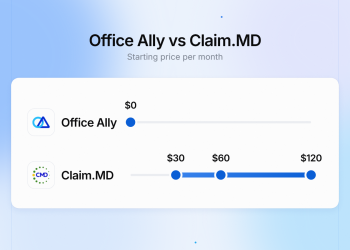
Where it really shines is pricing. Office Ally is free for participating claims, with an approximate $44.95 a month fee once non-par claims are submitted, which varies based on usage and setup. That makes it one of the most affordable places to start for solo and small group practices.
Best for: solo providers and small groups with modest claim volume looking for a low-cost way to get claims out the door. View the Office Ally profile
4. Change Healthcare (Optum): Best for Enterprise-Wide Payer Connectivity
Change Healthcare
Change Healthcare is no longer a standalone brand like it was before. Change Healthcare is for billing companies and medical practices that buy a nationwide EDI clearinghouse, not another website. In 2026 the public Change Healthcare URL routes into Optum for Business.
Optum’s platform is marketed as Medical Network Solutions, a claims clearinghouse with EDI Network and Smart EDI products, and RESTful APIs for eligibility, claims, attachments, prior authorisation, and remittance. The biggest selling point is scale: Optum says the medical network has more than 2,400 payer connections and serves medical providers, health plans and pharmacies, with automation for eligibility and benefit checks, claim status and proactive claim validation.
Practices should view the change of ownership as a true due diligence item. Ownership is an actual due-diligence item, not a smear, because Change Healthcare is inside Optum, which is inside UnitedHealth Group. Several practice management vendors have also identified a 2026 technical migration deadline for older systems that connect through this pipe.
Best For: Billing companies and multi-location practices that already send high volume through the Optum/Change Healthcare EDI pipe and need nationwide payer reach. See Change Healthcare profile
5. Claim.MD: Best for Transparent Pricing Per Claim Claim.MD
Claim.”MD’s reputation was built on pricing transparency in an industry where most vendors require a sales call to get a price. Claim.MD has earned its reputation for transparency in pricing, which is not common in the clearinghouse industry. They publish a price for each transaction type on their website, and there are no hidden fees, bundling requirements or long-term contracts.
The platform covers the basics: electronic claims, eligibility verification, ERA/remittance, claim status enquiries, integrates with most practice management systems via SFTP or API, and a clean web portal for manual operations.
There are two ways to price. Basic is $30/month + per-transaction fees, Small Volume is $60/month for 100 transactions, Unlimited is $120/month. A pay-per-claim option is also common at around $0.10 to $0.25 per claim with no monthly fees, no set-up costs and no contracts. With 40+ years in EDI.
Best for: Cost-conscious small and mid-sized practices, particularly those with fluctuating claim volume that don’t want a flat subscription. See Claim.MD profile.
Comparison Table: Claims Management Software at a Glance
| Platform | Best For | Starting Price | Payer Connections |
|---|---|---|---|
| Waystar | Unified RCM, large practices/health systems | Request pricing | 1,000+ |
| Availity | Multi-payer portal access | Free tier, paid tiers custom | Large national network |
| Office Ally | Budget small practices | Free for par claims, ~$44.95/mo for non-par | Thousands |
| Change Healthcare (Optum) | Enterprise and billing companies | Custom | 2,400+ |
| Claim.MD | Transparent per-claim pricing | $30 to $120/mo or $0.10 to $0.25/claim | 900+ |
Source: Vendor sites, Capterra, and third-party pricing guides, 2026.
Selecting Insurance Claims Software for Practices
Begin with claim volume. A solo practice sending under a few hundred claims a month doesn’t need the full automation suite of Waystar, and will pay for features it does not use. A health system submitting thousands of claims a day will quickly outgrow the simple submission model of Office Ally.
Next – consider EHR fit. If your practice management system has a native integration with only one clearinghouse, then moving away from it means more setup time with no guarantee of a return. Ask any shortlisted vendor directly, how claims flow back into your existing system, not just how claims go out.
Finally, read the fine print on pricing. Office Ally’s free tier looks tempting until the non-participating claims come in and the monthly fee is applied, and Availity’s advanced tiers are rarely quoted up front. Ask for a written quote before you sign anything long-term.
FAQ’s
What is claim management software?
Claims management software creates, cleanses, files, monitors and settles insurance claims from the moment a service is invoiced until it is paid or refused. It automates eligibility checks, flags coding errors prior to submission, tracks claim status across payers, and manages appeals, reducing denials and speeding up reimbursement for medical practices.
What is the difference between claims management software and a clearinghouse?
A clearinghouse mainly routes and formats claims so they can go to hundreds of payers with a single connection. Claims management software has that routing function plus deeper tools like denial prediction, claim editing workgroups, attachment handling and analytics dashboards so it covers a larger part of the revenue cycle than submission alone.
What claims management software integrates with EHRs?
Waystar, Availity, and Office Ally all offer EHR and practice management system integrations via APIs, SFTP, or direct partnerships to facilitate claims flow from clinical documentation into billing without the need to re-enter data manually. Allegation.MD also connects with most practice management systems via SFTP or API connections.
How much is claims management software for a small practice?
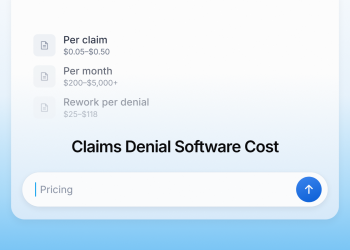
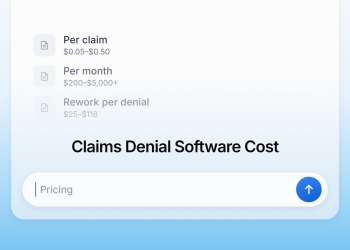
Costs differ greatly by vendor and volume. Office Ally is free for claims sent to participating payers, but costs about $44.95 a month once non-participating claims are filed. Claim.MD offers flat-rate monthly plans of $30, $60 or $120, or a per-claim rate of about $0.10 to $0.25 per claim. A custom quote is required for Waystar and Availity.
Is Change Healthcare still a standalone claims management platform?
Change Healthcare is now part of Optum for Business after being acquired by UnitedHealth Group and the public Change Healthcare site feeds into Optum’s Medical Network Solutions. Practices evaluating it in 2026 are effectively buying an Optum clearinghouse and claims platform, not a standalone Change Healthcare product.