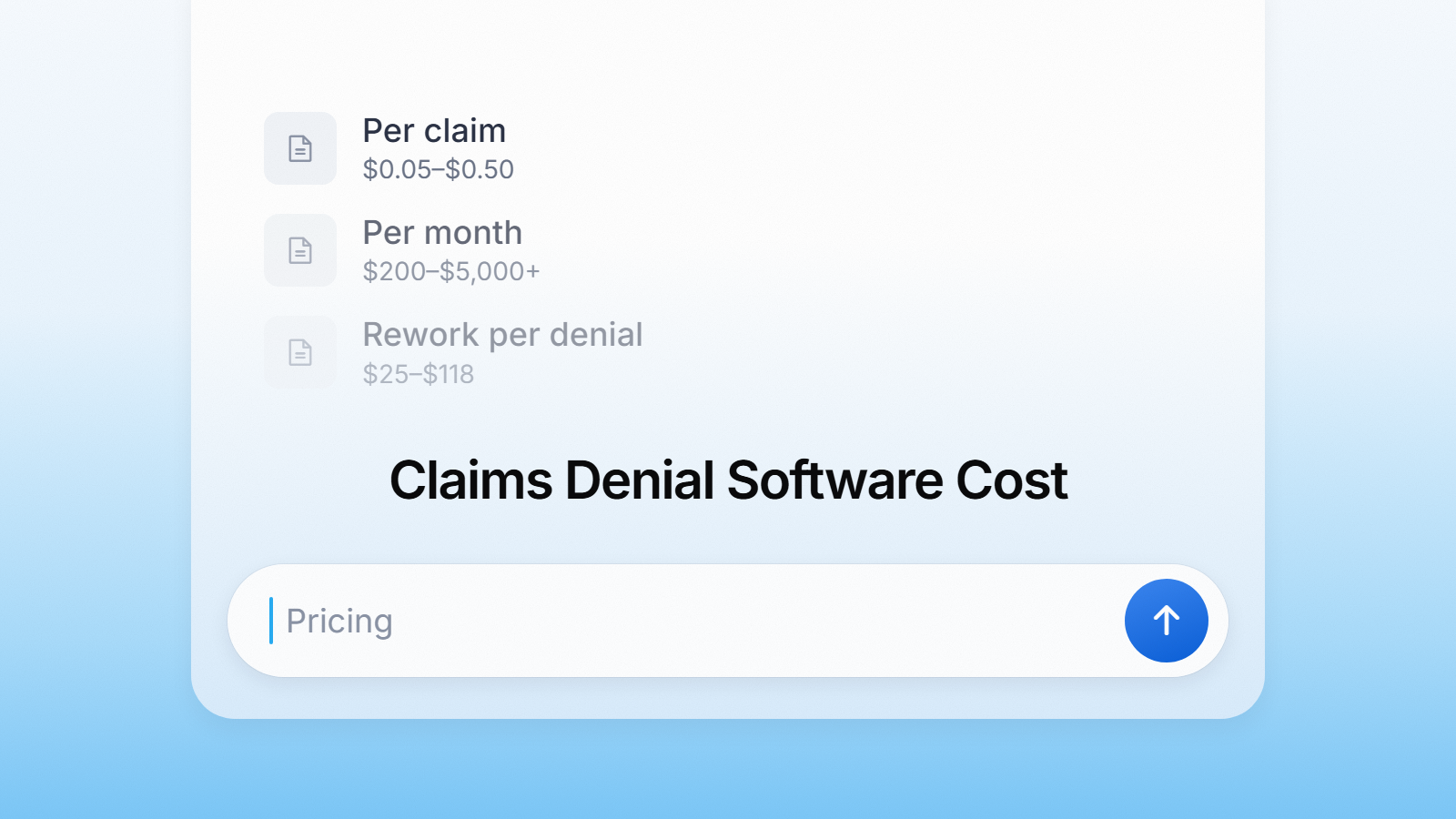
A single denied claim can cost a practice anywhere from $25 to $118 just to rework, and most billing teams never see that number until they start pricing denial management software. That gap between what denials cost in staff time and what software costs to prevent them is exactly where buyers get stuck.
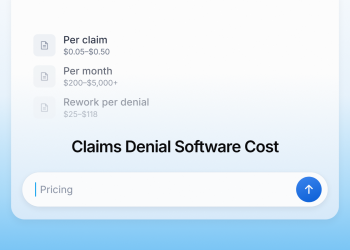
Claims denial management software cost typically falls between $0.05 and $0.50 per claim, or $200 to $5,000 or more per month, depending on claim volume, modules licensed, and whether the tool is bundled into a larger revenue cycle management platform. Unresolved denials represent an average annual loss of $5 million for hospitals, up to 5% of net patient revenue, and the cost to rework a single denied claim ranges from $25 to $118 depending on complexity. Enterprise health systems negotiating full RCM suites often land in six or seven figure annual contracts.
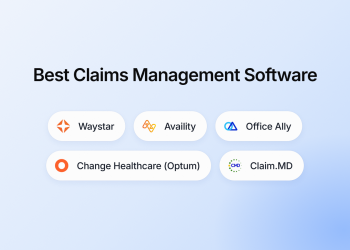
This guide breaks down what vendors like Waystar, Availity, Change Healthcare, and Claim.MD actually charge, based on third-party pricing guides and vendor documentation, since none of them publish a public price list.
How Much Does Claims Denial Management Software Cost Per Claim
Per-claim pricing is the most common model for clearinghouse-based denial tools, and it scales with submission volume rather than provider headcount. A small practice submitting a few hundred claims a month pays a very different effective rate than a hospital system submitting millions.
Third party guides report that small practices pay roughly 100 to 300 USD per provider per month, that mid sized organisations often report 2,000 to 5,000 USD or more a month, and that transaction based agreements run at about 0.11 USD per claim and 0.14 USD per eligibility check. Onboarding tends to run about 2,000 to 10,000 USD, EHR integration roughly 1,000 to 7,500 USD, and advanced training 500 to 5,000 USD, with annual contracts starting near 11,000 USD.
Other sources put the per-claim range a bit wider. One pricing comparison lists Waystar’s typical range at $0.15 to $0.50 or more per claim, covering both claims management and denial management. The spread exists because quotes depend heavily on how many modules a buyer licenses beyond the core clearinghouse function.
Why Vendors Don’t Publish a Flat Rate
Waystar lists packaged offerings, including Starter, Core, Performance, and Premium tiers for claim management, but publishes no numeric prices. That is standard across the category. Pricing depends on claim volume, provider count, and which analytics or AI modules a practice wants layered on top of basic claims and eligibility checks.
Claims Denial Management Software Pricing by Vendor
Below is a comparison of publicly reported pricing signals for the four vendors buyers compare most often. These figures come from third-party pricing guides and vendor comparison sites, since none of these companies list prices on their own websites.
| Vendor | Pricing Model | Reported Range | Best Fit |
|---|---|---|---|
| Waystar | Per-claim or subscription, custom quoted | $0.11 to $0.50 per claim; $200 to $5,000+ per month | Mid-size to enterprise groups needing broad RCM plus denial analytics |
| Availity | Subscription, tiered by transaction volume | Custom quoted, typically bundled with eligibility and claims modules | Practices needing payer connectivity alongside denial workflows |
| Change Healthcare | Per-NPI EDI fee plus transaction fees | Around $15 per NPI per month for EDI, per-transaction fees on top | Organizations already on Change Healthcare’s clearinghouse rails |
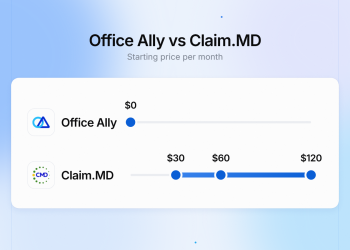
| Claim.MD | Flat monthly clearinghouse fee | Lower-cost tier compared to enterprise RCM platforms | Small to mid-size practices wanting a simpler, lower-cost clearinghouse |
Source: Vendor comparison guides and clearinghouse pricing pages, 2026.
Clients with their own servers were reported paying $15 per month per NPI for EDI fees associated with the Change Healthcare clearinghouse, while Waystar’s transaction-based charges run $0.11 for claims, $0.04 for remits, and $0.14 for eligibility requests. That side-by-side is useful if you are migrating off one clearinghouse and comparing total transaction cost against another.
What Drives the Cost of Claim Denial Prevention Software
Buyers researching claim denial prevention software cost usually ask the wrong first question. It is not “what does it cost per claim,” it is “how many of our denials are even preventable at the point of submission.”
Most denials start with data the practice controls: missing or inaccurate data accounts for about 50% of them, authorizations for 35%, and registration errors for 32%, according to Experian’s 2025 denial survey. That matters for pricing because prevention-focused tools that catch these errors before submission often justify a higher per-claim fee than pure post-denial appeal tools.
Step 1: Count your monthly claim volume
Step 2: Identify your current first-pass denial rate
Step 3: Request quotes scoped to that volume, not a generic tier
Step 4: Ask whether appeal automation is included or a separate module
The Scale of the Denial Problem
Out of roughly $3 trillion in medical claims submitted by U.S. hospitals each year, approximately 9% are denied on first submission, equating to $262 billion in initially denied claims annually per Change Healthcare’s Revenue Cycle Denials Index. Across more than 2,100 hospitals and 300,000 physicians, the average initial denial rate was 11.81% in 2024, easing slightly to 10.63% in the first half of 2026, though payer takebacks after payment rose to 1.57% of net revenue. That shift toward post-payment takebacks is a newer wrinkle buyers should ask vendors about directly, since not every denial tool monitors recoupment activity.
Is Denial Management Software Worth It for Small Practices
Billing staff on forum threads frequently complain about per-claim fees stacking up quietly on top of a base subscription, especially when a clearinghouse quote looked cheap upfront but didn’t include eligibility checks or remittance fees separately. That is a fair complaint. The real cost comparison has to include every transaction type a practice runs, not just the headline claim fee.
The average medical practice loses 15 to 25% of claims revenue to denials, and claim denials cost U.S. healthcare providers over $262 billion annually, with denial rates increasing by 3 to 5% year-over-year across most specialties. For a solo or small group practice, even a modest reduction in unworked denials can offset a $200 to $800 monthly subscription within a couple of billing cycles.
The average cost to rework a denied claim is $25.20, and about 65% of denied claims are never resubmitted, meaning practices are silently writing off recoverable revenue every single day. That 65% figure is the single biggest argument for paying for automation rather than relying on manual follow-up, since most practices simply don’t have staff time to chase every denial by hand.
Frequently Asked Questions
How much does denial management software cost per claim?
Per-claim pricing for denial management modules generally runs from $0.05 to $0.50 per claim, with volume discounts for high-submission practices. Waystar’s transaction-based pricing has been reported around $0.11 per claim, $0.04 per remittance line, and $0.14 per eligibility check. Smaller practices on subscription plans may instead pay a flat monthly fee between $100 and $800 per provider.
Is denial management software included in RCM platforms?
Yes, most denial management tools ship as a module inside a broader revenue cycle management or clearinghouse platform rather than as standalone software. Waystar, Availity, and Change Healthcare all bundle denial and appeal management with claims submission, eligibility checks, and payment posting, so buyers rarely pay for denial tools in isolation.
What is the ROI of claims denial management software?
ROI comes mainly from recovering revenue that would otherwise go unclaimed, since an estimated 50 to 65 percent of denied claims are never reworked. With rework costs running $25 to $118 per claim and hospitals losing up to 5 percent of net patient revenue to unresolved denials, automating even part of the appeal process can pay back a subscription within 6 to 9 months for many practices.
Why don’t vendors publish denial management software prices?
Most denial management vendors, including Waystar, Availity, and Change Healthcare, quote pricing based on claim volume, number of providers, and which modules a practice licenses, so a published flat rate would not reflect actual contract terms. Buyers typically need a volume estimate and current EHR setup before a vendor will issue a quote.
Does denial management software reduce claim denial rates?
It can, but results depend on how denials happen in the first place. Since missing or inaccurate data causes roughly half of denials, software that catches errors before submission tends to lower first-pass denial rates more than tools that only manage denials after they occur. Top-quartile practices using full prevention workflows keep denial rates under 4 percent.