A 10 person distributor using Quickbooks and 4 spreadsheets will normally hit a wall about month 18 just as the volume of orders and the complexity of inventory exceed the ability to reconcile manually. That’s when most small business owners begin to Google ERP software and immediately get lost in enterprise pricing pages designed for 500-seat companies.
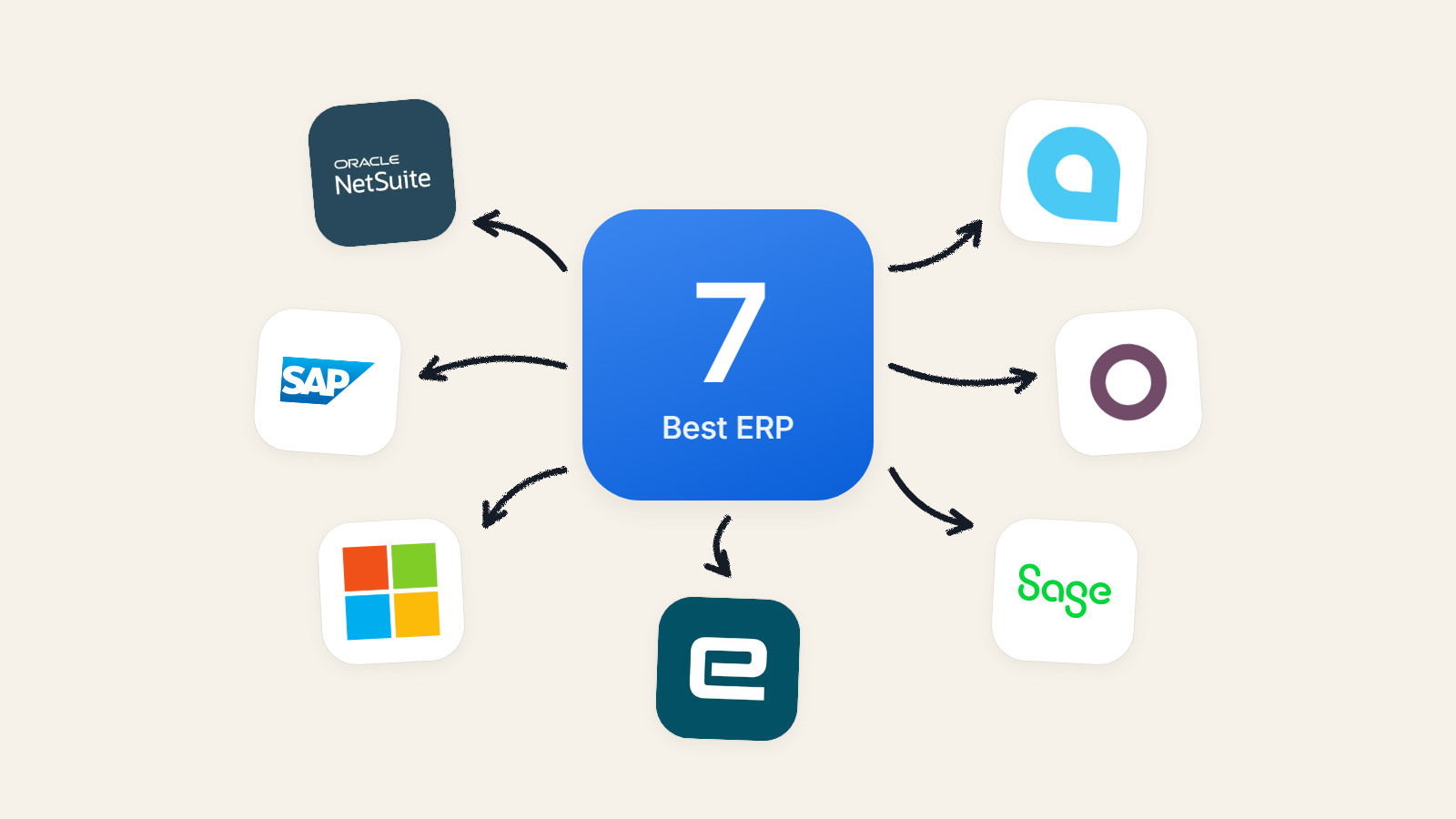
The best ERP for small business in 2026 is less about brand name and more about team size and budget. Fast-growing teams fit NetSuite and Microsoft Dynamics 365 Business Central, tighter budgets fit Odoo and Acumatica, and finance-heavy or manufacturing firms fit Sage Intacct and SAP Business One. The global ERP software market is projected to reach $157.1 billion by 2033 from $77.1 billion in 2025, growing at a CAGR of 9.5% from 2026 to 2033. This growth tells you how fast cloud options designed for smaller teams are multiplying.
This guide compares 7 ERP systems that actually fit small business budgets and timelines, not just enterprise marketing pages. All prices and ratings below are pulled from vendor pricing pages, G2 or Capterra, not from guesswork.
What Small Businesses Need to Know Before Buying ERP Software
Small teams screw up ERP selection for one common reason: They shop like an enterprise buyer. A 15-person company does not require the same configuration depth as a 500-person manufacturer, and the cost of that configuration usually means a longer and more expensive implementation than the business can absorb.
As a small business, there are four things that matter more than feature checklists when you are choosing affordable ERP software.
- Cost per user and if pricing is based on headcount or transaction volume. This impacts your total bill as you grow
- Implementation timeline – nine months too long for a five-person finance team
- Core modules you really need today are financials, inventory and basic CRM—not every module a vendor offers
- Deployment model, with cloud and hybrid deployment estimated to have the largest market share of 83.07% in 2026, and cloud generally means lower in-house IT overhead
- This is echoed in buyer conversations on review sites. Reviewers of larger finance platforms like Sage Intacct have complained about high prices, frequent price increases, expensive add-ons, and limited affordability for smaller organizations, which is exactly the trap a 20-person company wants to avoid when shopping for small business ERP in 2026.
7 Best ERP Software For Small Business In 2026
None of the seven systems are retrofitted enterprise software; each is sold or configured for smaller teams. The prices below are indicative ranges sourced from vendor pricing pages and partner guides as none of the vendors publish a single fixed list price.
| ERP System | Best For | Starting Price | Deployment |
|---|---|---|---|
| NetSuite | Fast-growing businesses needing financials, CRM, and ecommerce in one system | $999/mo base plus $99 to $199/user/mo | Cloud |
| SAP Business One | Small manufacturers and distributors wanting SAP-grade controls | $95 to $250/user/mo | Cloud or on-premise |
| Microsoft Dynamics 365 Business Central | Businesses already standardized on Microsoft 365 | $80/user/mo (Essentials) | Cloud |
| Acumatica | Teams with many occasional users who don’t want per-seat fees | From $6,396/year | Cloud, on-premise, hybrid |
| Odoo | Budget-conscious teams wanting modular, customizable ERP | $24.90/user/mo | Cloud, on-premise, hybrid |
| Sage Intacct | Services firms and nonprofits needing deep financial management | $15,000 to $35,000/year | Cloud |
| Epicor Kinetic | Small manufacturers needing shop floor and MRP depth | $100 to $200/user/mo plus $1,500/mo base | Cloud, on-premise |
Source: Vendor pricing pages and ERP Research, 2026.
1. Net Suite
Best for: fast-growing small businesses looking for one system for financials, inventory and ecommerce
For good reason, NetSuite is Oracle’s cloud ERP and the most recognizable name on this list: it handles financials, CRM, inventory and ecommerce from one login, and scales neatly as headcount grows. The tradeoff is the cost. The base platform for NetSuite costs $999 per month, and users pay between $99 and $199 per month. Therefore, a typical small deployment will run you anywhere from $12,000 to $60,000 a year.
- SuiteSuccess packages for sub-10 user rollouts
- Built-in CRM and ecommerce Most competitors sell as add-ons
- Strong partner & integration ecosystem
A small team should budget at the low end of the scale—$25,000 for a small-business project up to $750,000 or more for an enterprise implementation—provided the project is simple and single-entity.
2. SAP Business One
Best for: Small manufacturers and distributors that want SAP-quality financial controls
SAP Business One brings the reliability and depth of inventory of SAP to a company of 10 to 250 employees. It starts at $95/user/month on cloud or on-premise. A cloud subscription costs $95-250/user/month, or $3500-5500/user as a one-time on-premise license plus 18-20% annual maintenance.
- Robust Multi-Currency & Compliance Controls for Distributors with International Suppliers
- Choose between SAP HANA and Microsoft SQL Server database
- Rated 4.3/5 on Capterra
SAP Business One has a 4.3 rating from 344 reviews on Capterra and is best for small businesses with clean financial processes in place to migrate. Implementation typically adds $15,000 to $150,000 to license fees.
3. Microsoft Dynamics 365 Business Central
Best for: already running on Microsoft 365 and Teams for small business
Microsoft Dynamics 365 Business Central is for companies who want the ERP to be an extension of Outlook and Excel, not a separate system to learn. Microsoft’s list price as of November 1, 2025 is $80 per user per month for the Essentials plan and $110 per user per month for the Premium plan, with lighter Team Member licenses available for occasional users.
- Native deep integration with Excel, Outlook and Power BI
- Essentials includes finance, sales and inventory; Premium adds manufacturing and service management
- Extensive partner network for implementation
Where this platform wins its small business reputation is the cost of implementation. Implementation for a small SMB of 5 to 15 users will generally run $15,000 to $35,000 – a fraction of the cost of a similar NetSuite or SAP rollout.
4. Acumatica
Best for: companies with lots of occasional users who don’t want to pay per seat
Acumatica eschews the per user pricing model that defines most of this list. It offers a consumption-based pricing model, sold in four edition tiers that scale based on transaction volume and company size rather than headcount, with unlimited users included at each tier. Pricing begins at $6,396 per year for the Essentials tier.
- No per seat fees so more warehouse or field staff does not increase your bill
- Strong construction and distribution industry problems
Deployment flexibility: cloud, on-premise and hybrid G2 reviewers say Acumatica’s pricing model is ideal for small to mid-market businesses in construction, manufacturing, distribution and retail that need unlimited user access without per-seat licensing costs, however very small teams with light transaction volume may not see the same savings.
5. Odoo
Best for: Budget-conscious teams who want to start small and add apps as they scale up
Odoo is the cheapest all-in-one ERP on this list. The Standard plan is about $24.90 per user per month and the Custom plan is about $49 per user per month, billed annually, with a free single-app tier for the smallest teams. Host the open source Community edition yourself, at no cost.
- 30+ modular apps including CRM, accounting, inventory, HR and ecommerce
- Turn on apps later, pay only for what you use
- International partner network and community
G2 gives Odoo a rating of 4.3/5 with over 1200 reviews, and Capterra gives it a 4.2/5 with over 1300 reviews. The tradeoff is support quality and a steeper learning curve than paid-support competitors, something worth testing in a demo before committing.
6. Sage Intacct
Best for: service-based businesses, nonprofits, and multi-entity businesses that live in their financials
- Sage Intacct is not so much a general ERP but a finance-first platform that covers enough operational ground for many small businesses. Annual subscription costs are generally between $15,000 and $35,000, and implementation is estimated to be one to one and a half times the subscription.
- Multi-entity consolidation was for companies with multiple legal entities
- Tools for deep project accounting and revenue recognition
- Rated 4.3 out of 5 on G2 from approximately 4,000 reviews
Sage Intacct has a G2 rating of 4.3 out of 5, based on some 4,000 reviews. Some reviewers have noted increasing costs over the life of a contract, so negotiate renewal terms before you sign up.
7. Kinetic from Epicor
Best for: small manufacturers needing shop floor control, not just general ledger
Epicor Kinetic is the most manufacturing-specific system on this list. It’s focused on bill of materials, production scheduling, and MRP, rather than general business operations. Pricing starts at a base platform fee of $1,500/month and $100 to $200 per user per month.
- Native MES and shop floor control, without third-party add-ons
- Discrete, mixed-mode and engineer-to-order manufacturing deep support
- On-premise or hybrid deployment Cloud
The total cost of ownership is typically between $100,000 and $500,000, placing Epicor near the top of this list. It’s for small manufacturers that are outgrowing a basic MRP tool, not for the smallest service-based teams.
ERP Software Cost for Small Business in 2026: How Much?
Budget is usually the real determiner, more than any feature list. Small business ERP costs come in two flavors: a yearly software subscription and a one-time implementation fee, and both vary wildly by vendor and how much customization you ask for.
| ERP System | Typical Annual Software Cost | Typical Implementation Cost |
|---|---|---|
| NetSuite | $12,000 to $60,000 | $25,000 to $150,000 |
| SAP Business One | $30,000 to $75,000 | $15,000 to $150,000 |
| Microsoft Dynamics 365 Business Central | $9,600 to $66,000 | $15,000 to $75,000 |
| Acumatica | From $6,396 | $20,000 to $75,000 |
| Odoo | $0 to $29,880 (10 users, Custom plan) | $5,000 to $20,000 |
| Sage Intacct | $15,000 to $35,000 | $20,000 to $75,000 |
| Epicor Kinetic | $30,000 to $60,000+ | $50,000 to $300,000 |