Both are EHRs, with e-prescribing as a feature, not separate tools, which changes the way you should judge them.
If you are specifically looking for drchrono vs athenahealth e-prescribing, the short answer is this: Both DrChrono and athenahealth provide EPCS-certified e-prescribing with Surescripts, including built-in prior authorization with CoverMyMeds. Athenahealth pricing begins at around $140 per provider per month, plus 4% to 8% of monthly collections. DrChrono e-prescribing may require a separate EPCS add-on, depending on plan tier.
Here’s a look at EPCS support, pharmacy network reach, pricing structure, and where each tool tends to frustrate buyers based on real deployment patterns.
DrChrono vs athenahealth E-Prescribing: Quick Comparison Table
Here’s how the two stack up on the features that matter most for prescribing workflows.
| Feature | DrChrono | athenahealth |
|---|---|---|
| EPCS Certified | Yes | Yes |
| Pharmacy Network | Surescripts | Surescripts |
| Prior Authorization | CoverMyMeds, integrated | Integrated ePA workflows |
| EPCS Included in Base Plan | Only on Apollo Plus tier | Yes, part of athenaClinicals |
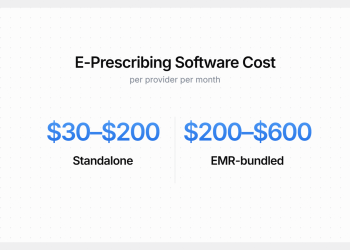
| Starting Price | ~$200/provider/month (est.) | ~$140/provider/month plus 4-8% of collections |
| Mobile Prescribing | iPad, iPhone, web | Web, mobile app |
Source: DrChrono official site, Software Finder pricing research, 2026.
DrChrono E-Prescribing Features: What’s Actually Included
DrChrono eRx allows providers to send electronic prescriptions for controlled and non-controlled substances from iPad, iPhone or web with EPCS, Surescripts integration and two-factor authentication. The module is embedded within the larger EHR chart, so a prescription moves from the clinical note to the pharmacy without changing screens.
EPCS and Controlled Substances
EPCS integrates seamlessly into the clinical workflow for e-prescribing from any device and fully complies with DEA, NIST and Surescripts requirements. But setup isn’t automatic. You have to be on a paid plan with the EPCS add-on (unless you’re on the Apollo Plus tier where EPCS is included). Otherwise, you contact your account manager to add it. Verification is via ID.me, and providers must pass a Level of Assurance 3 identity check with details including DEA number, NPI number, and Social Security number.
Pharmacy Access and Prior Authorizations
DrChrono partners with Surescripts, which links providers to 95% of pharmacies in the U.S. CoverMyMeds powered prior authorization providers can submit, track, and manage prior authorizations without leaving the prescription workflow, helping to reduce treatment delays and eliminate the need for separate authorization platforms. This is important for small practices who otherwise spend a visit’s worth of staff time each week chasing prior auth by fax.
Forum users often question if DrChrono’s mobile-first design makes desktop charting slower. Actually, the EPCS workflow is the same for all devices, but staff familiar with desktop EHRs may experience a quick learning curve for the mobile-first interface.
Athenahealth E-Prescribing Cost & What It Covers
Athenahealth doesn’t offer e-prescribing as a standalone line item. athenaOne is a single platform with a single subscription that includes the EHR and practice management, with charting, scheduling, e-prescribing, claims submission and payment posting all running through the core platform.
How does the Pricing Model work?
Pricing begins in the $140s per provider monthly and usually falls between 4% and 8% of a practice’s monthly collections. That’s the biggest mistake buyers make about the collections-based fee. The practice has three providers and modest monthly revenue but can pay several thousand dollars a month once the percentage fee is added on top of the base rate.
The base pricing bundles athenaClinicals, athenaCollector, athenaCommunicator, and athenaTelehealth, along with the revenue cycle management workflows built into the platform, so e-prescribing is included free of charge. In addition to the subscription, Athenahealth is also expensive for many reviewers. Pricing is based on gross revenue, so it can be tough for smaller practices.
Implementation Costs to Budget For Setup doesn’t come cheap either. Implementation and setup usually costs between $15,000 and $40,000 for system deployment, workflow configuration, onboarding, and practice-specific customization. Data migration typically runs between $500 and $25,000 depending on how much legacy data needs to migrate.
Pharmacy Network and Clinical Safety Comparison
Both vendors use Surescripts to route prescriptions, so the functional pharmacy reach is almost the same for either platform. They differ in the size of the network around them. Athenahealth’s platform is on a network of more than 160,000 providers, and the company was awarded the 2026 Best in KLAS award, giving it a larger pool of real-world prescribing data that feeds drug interaction and allergy alerts.
DrChrono’s clinical safety tools work the same on paper. The platform features drug interaction checks, allergy alerts and access to a patient’s prescription history to minimize medication errors. The practical difference in day to day safety checking for a solo or small group practice is small. The bigger differentiator ends up being price structure and setup speed.
Which One Should Small Practices Choose?
If the ability to predict software costs holds more weight than bundled revenue cycle services, DrChrono’s flat per-provider pricing makes it easier to budget against, if EPCS is confirmed to be included or quoted up front. For practices that want to purchase billing, collections and e-prescribing from a single vendor and are comfortable with a percentage-of-revenue model, athenahealth’s bundled approach means they don’t have to manage a billing vendor separately.
Frequently Asked Questions
Is EPCS e-prescribing supported by DrChrono?
Yes. DrChrono’s eRx module is EPCS certified and allows providers to prescribe Schedule II-V controlled substances from iPad, iPhone or desktop, using two-factor authentication through ID.me and in compliance with DEA, NIST and Surescripts requirements. Some plan levels include EPCS, while others require an add-on or upgrade.
Includes athenahealth’s e-prescribing module with base subscription.
Yes. E-prescribing is embedded in athenaClinicals, it’s included in the core athenaOne subscription starting at about $140 per provider per month, plus a 4% to 8% collections fee. E-prescribing is not billed as a separate line item, but add-on modules such as advanced interoperability tools are.
Is DrChrono better than athenahealth for integrated with pharmacies?
Both connect via the Surescripts network, which includes the vast majority of U.S. retail pharmacies, so pharmacy reach is nearly the same. While DrChrono touts its Surescripts connection as reaching 95% of U.S. pharmacies, athenahealth’s network strength is rooted in its scale across more than 160,000 providers, which can translate to more real-world pharmacy data matching.
athenahealth and DrChrono do not charge extra for prescribing controlled substances.
If you’re not on DrChrono’s Apollo Plus practice tier, you will need to purchase a paid plan in addition to the EPCS add-on. E-prescribing, including controlled substance workflows, is part of the base athenaOne subscription, so there is usually no separate EPCS fee, but there are implementation and training costs.
DrChrono or athenahealth Which is easier to set up for a small practice?
DrChrono is usually faster to activate as it is a direct subscription with self-service onboarding steps for EPCS through ID.me. athenahealth’s setup usually takes longer and costs more upfront, with implementation estimated between $15,000 and $40,000, because it involves configuring billing.