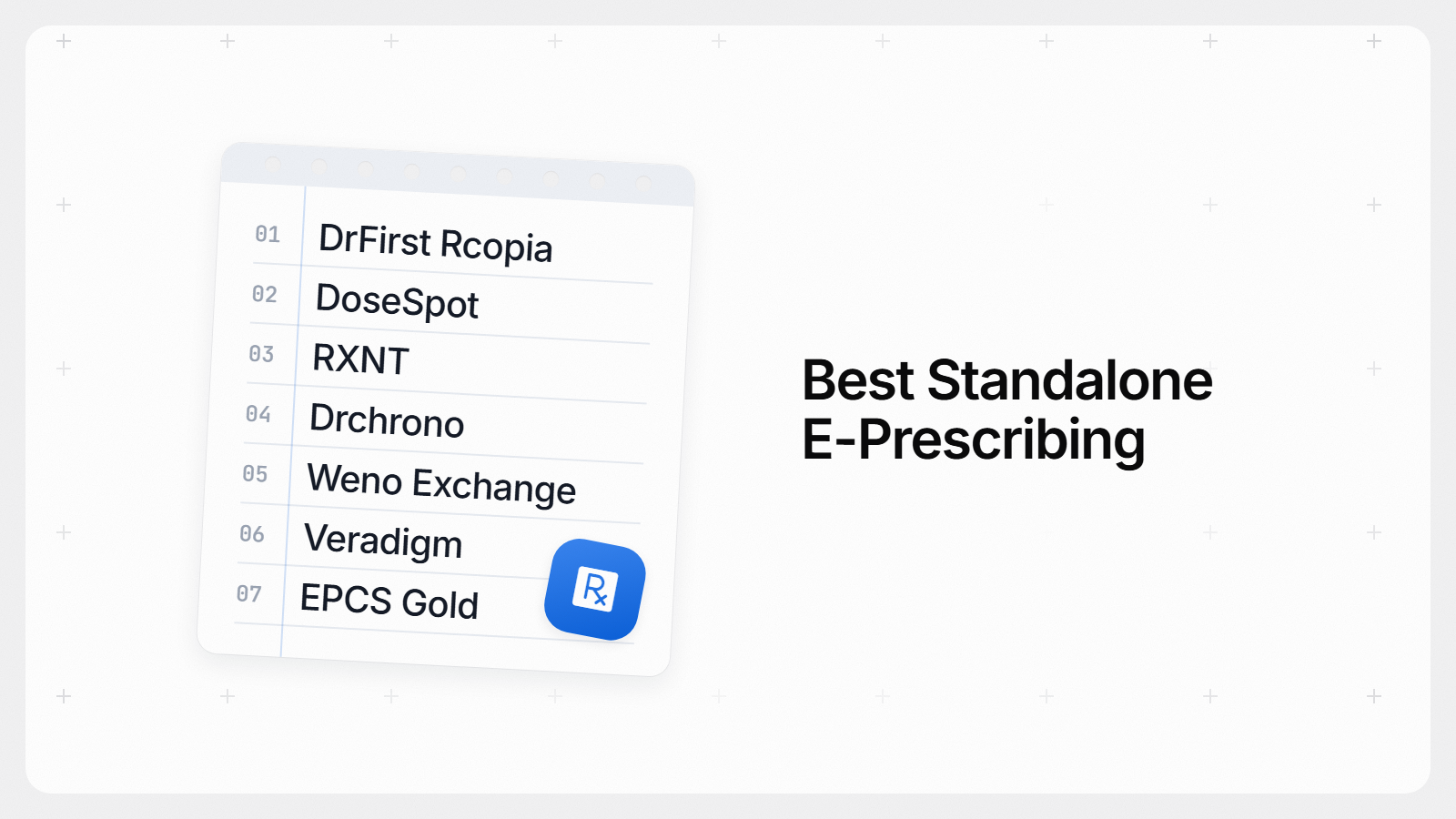
Most buyers don’t realise how many options there are in 2026 for a practice that just needs to send prescriptions electronically and doesn’t want to buy a full EHR. Standalone e-prescribing software allows a clinician to write, renew, and cancel prescriptions, check for drug interactions, and view medication history from a lightweight application that exists outside of a full medical record system.
Standalone e-prescribing software. This is a stand-alone application that allows you to send prescriptions electronically to pharmacies without having a full electronic health record system. DrFirst Rcopia, DoseSpot, and RXNT are the top picks for 2026. They are EPCS certified through the Drummond Group, enabling providers to legally prescribe controlled substances while still keeping the door open to add a full EHR later.
When buyers search for a tool on forums like Reddit and Quora, they tend to ask the same three questions: 1) Is it EPCS compliant? 2) Will it grow into a full EHR eventually? 3) What does it really cost per provider per month? This guide answers all three and ranks the seven standalone tools worth a demo.
What Is Standalone E-Prescribing Software & Who Needs It
For practices that don’t want to pay for or learn a full EHR just to send prescriptions electronically, standalone e-prescribing software exists. This is a typical scenario for solo practitioners, small behavioural health clinics, telehealth startups, and speciality practices that have a billing or scheduling tool but cannot prescribe.
E-prescribing software can be stand-alone or integrated with EHRs and transmits prescriptions electronically, including EPCS, from a desktop, tablet or phone. That flexibility is the main reason buyers choose a stand-alone tool first: it solves the immediate compliance issue without committing the practice to one EHR vendor from day one.
7 Best Standalone E-Prescribing Software Options in 2026
1. Rcopia of DrFirst
DrFirst has one of the longest track records in this space. Black Book named DrFirst the nation’s #1 vendor of standalone electronic prescribing systems in its 2013 State of the E-Prescribing Industry report. DrFirst is also a recipient of the Surescripts White Coat of Quality Award in 2011, 2012, 2013 and 2015, making it one of only two companies to win the award every year since its inception in 2010.
DrFirst worked directly with the Drug Enforcement Administration to test and implement two-factor authentication and EPCS requirements, and its Rcopia 4 plus EPCS Gold product enables a prescriber to send prescriptions electronically to any US pharmacy through the Surescripts network. And it makes a lot of sense for practices that want a vendor with a strong regulatory history and the ability to integrate with an EHR down the road. Demo options are available from the DrFirst profile on Software Finder.
2. DoseSpot
DoseSpot is built for EHR and telehealth integrators, but they also offer a plug-and-play version that can be used stand alone. DoseSpot offers two integration options and is Surescripts, Drummond and ONC certified, ensuring the solution is fully compliant with state and federal EPCS mandates.
Certified providers are able to electronically prescribe controlled substances, have conversations with patients about medication costs using real-time pharmacy benefit data, and initiate electronic prior authorisations right from the platform, while DoseSpot continues to build out its identity proofing and reporting features. Pricing varies by source and package as reported. One review reported $75 per user per month, a one-time implementation fee of $2,000, and an EPCS fee of $2,500 every two years. Other integrators have lower per provider rates so be sure to check current numbers directly with DoseSpot. For pricing, check the DoseSpot profile.
3. RXNT
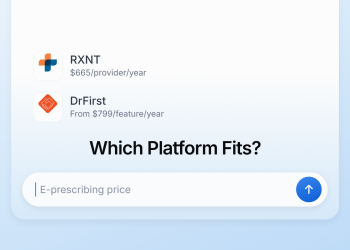
This is a category where RXNT has a strong history of certification. In 2011, RXNT became the first stand-alone electronic prescribing solution to be certified by CCHIT Certified 2011 Comprehensive. In 2014, the company launched the first EPCS-certified mobile electronic prescribing application for Android devices. RXNT’s EHR version 7.2 was certified to the 2015 Edition ONC Health IT certification criteria by the Drummond Group in 2017.
That history makes RXNT a reasonable choice for practices seeking a vendor with early mover credentials in mobile EPCS prescribing. See RXNT profile for current plan details.
4. Drchrono
Drchrono is a complete EHR and practice management platform, but practices can evaluate the e-prescribing module independently, weighing the e-prescribing features against pure standalone tools. Its Drchrono profile is worth comparing to the more narrowly focused vendors on this list for buyers who may eventually want billing and scheduling bundled in.
5. Exchange Weno
Weno Exchange is often at the table in the cost comparisons for teams building e-prescribing into their own product, not buying a packaged standalone app. Weno Exchange prescriber costs have been reported as $8 to $176 per year plus transaction fees with EPCS support available. It seems more appropriate for developer-heavy teams than a regular small practice buyer.
6. Veradigm
Veradigm also supports EPCS, but pricing is mostly private and done on a case-by-case basis. Consider it if your practice already uses other Veradigm (formerly Allscripts) products and wants prescribing to align with your existing vendor relationship.
7. DrFirst EPCS Gold
EPCS Gold is DrFirst’s dedicated controlled substance module. It is often sold in conjunction with Rcopia for practices that specifically need the controlled substance workflow without the full Rcopia feature set. Supports secure, integrated e-prescribing workflows that comply with state and federal controlled substances requirements to electronically transmit controlled substance prescriptions to all pharmacies.
Standalone E-Prescribing Software Pricing in 2026
Pricing is one of the most black box areas in this category. Most vendors will provide custom quotes once they know the prescriber count and whether a practice needs EPCS, so the numbers below are directional and not guarantyd quotes.
| Vendor | Reported Starting Price | EPCS Fee |
|---|---|---|
| DoseSpot | $32 per user per month | Often bundled or added separately depending on package |
| DoseSpot (Forbes Advisor estimate) | $75 monthly plus one-time $2,000 implementation fee | $2,500 every two years |
| DrFirst | Quote-based | Included in feature pricing, confirm with vendor |
| RXNT | Quote-based | Confirm with vendor |
Source: Capterra, Forbes Advisor, 2026.
Identity proofing is a separate cost that is often overlooked. Several integrators say that on top of whatever base subscription a vendor charges, they have a one-time identity proofing fee of $25-$50 per prescriber through the credentialing service provider.
Deciding Between These Vendors
Step 1: Verify EPCS certification status
Don’t accept a sales page at face value. Request proof that they are presently Drummond Group EPCS certified. Vendors update platforms and may change certification status and audit scope.
Step 2: Review the EHR integration roadmap
If there’s any chance the practice will go to a full EHR in the next two to three years, ask if the e-prescribing vendor has existing integrations with that EHR or an open API.
Step 3. Get BAA in writing
HIPAA certification does not exist. Each vendor on this list should have a Business Associate Agreement signed before any patient data is put on their platform.
Step 4: Separate out identity proofing and renewal fees
The base subscription price rarely covers everything. Before you sign, specifically ask about one-time identity proofing costs and recurring EPCS renewal fees.
Frequently Asked Questions
What is e-prescribing software?
Standalone e-prescribing software is an application that sends prescriptions electronically to pharmacies, without the need for a complete electronic health record system. It can be used by practices to write, renew, and cancel prescriptions, check drug interactions, and view medication history, all while keeping their existing paper charts or a lighter practice management tool.
Is the e-prescribing software (standalone) EPCS compliant?
Major independent vendors like DrFirst, DoseSpot and RXNT are certified for Electronic Prescribing of Controlled Substances by Drummond Group and comply with state and federal EPCS mandates. You typically must show your identity and use two-factor authentication to be certified to send controlled substance prescriptions.
Can an EHR be added to a stand alone e-prescribing system at a later date?
Yeah. Most stand-alone e-prescribing tools, such as DoseSpot and DrFirst Rcopia, are designed to work with EHR and EMR systems, so a practice can get started with the stand-alone version and then add it to a full EHR without switching vendors or losing prescribing history.
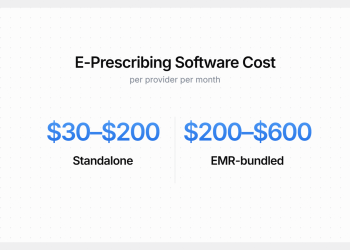
How much does standalone ePrescribing software cost?
Pricing varies by vendor and configuration. DoseSpot is said to charge per-prescriber fees of $30 to $75 per month plus a one-time EPCS identity proofing cost, while DrFirst has a quote-based pricing model. Buyers should always check current pricing directly with the vendor as published rates change.
Do you need a BAA with these vendors for HIPAA compliance?
Yes. There is no “HIPAA certification” so e-prescribing vendors enter into a Business Associate Agreement (BAA) with each practice to define how patient data is protected. Buyers should require any vendor on this list to sign a BAA before going live.