A two-provider family practice shopping for an EMR in 2026 can pay less than $1,000 a month to more than $3,000, depending on whether the vendor charges a flat per-provider fee or a percentage of collections. That gap is the #1 reason small practice owners get frustrated during their mid-search.
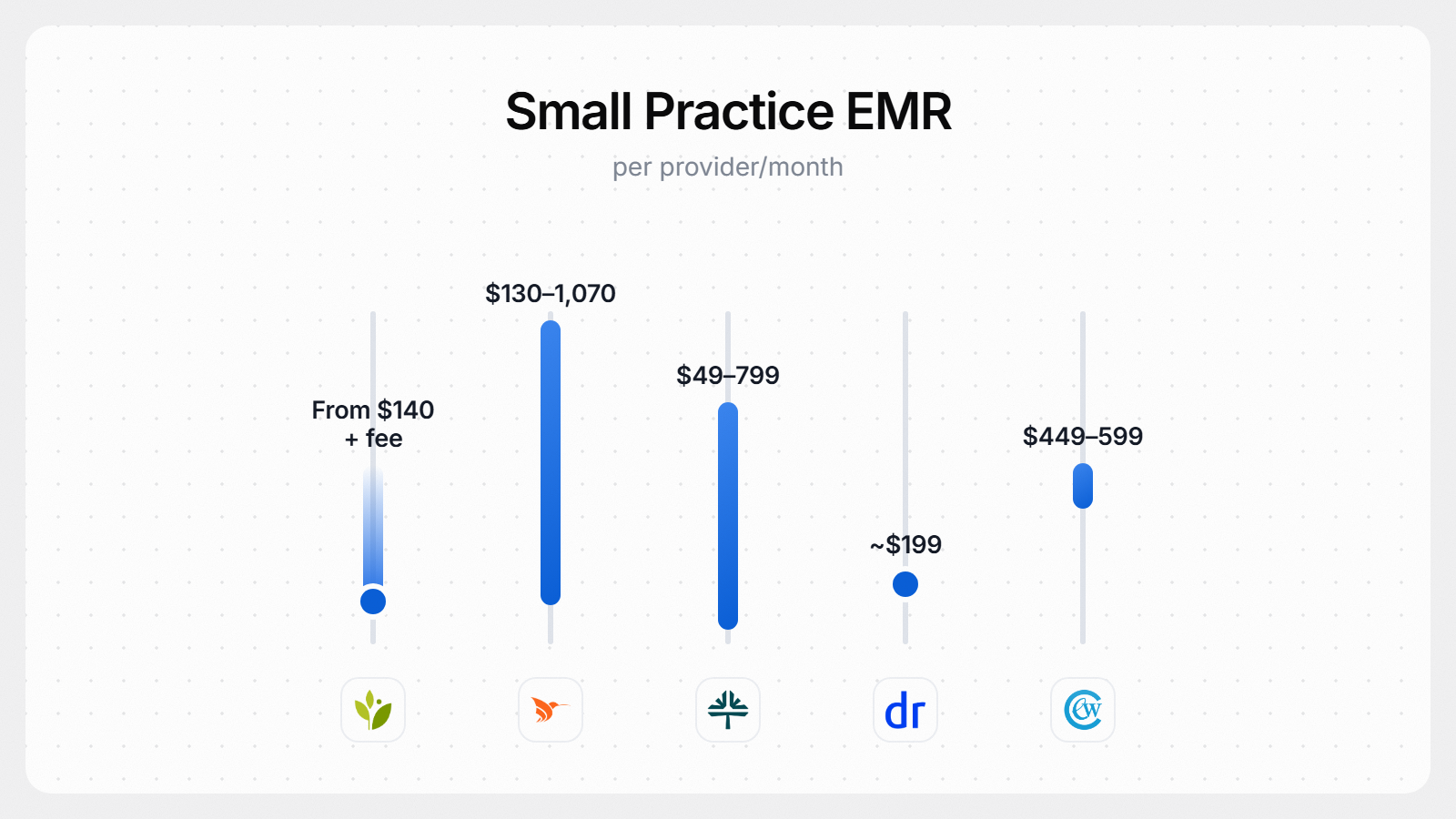
If you’re looking for the best emr software for small practice buyers, it’s usually five or six names, not fifty. athenahealth pricing usually starts at $140 per provider per month, plus a collections-based fee. Tebra and DrChrono have lower entry tiers designed for practices of one or two providers. eClinicalWorks and AdvancedMD are more expensive but offer greater speciality depth.
This guide walks through 7 EMR systems small clinics are actually shortlisting in 2026, what each one costs after implementation, and what practice size each one is a good fit for. The pricing and feature claims below are taken from vendor pricing pages and third-party cost research published this year.
Buyers on Reddit and Quora threads about emr for small practice 2026 regularly express two concerns: hidden implementation fees and contracts that lock a small office in for years before they know if the system fits. Remember both as you compare the options.
Best EMR Software for Small Practices in 2026
There is no best EMR software for small practice buyers that is one-size-fits-all. There is no right answer. It is contingent upon the number of providers, the speciality, and if the practice wants billing bundled in or separate. Even on the same short list, a solo behavioural health provider and a five-physician family medicine group will land on different vendors.
athenaOne) athenahealth Pricing:
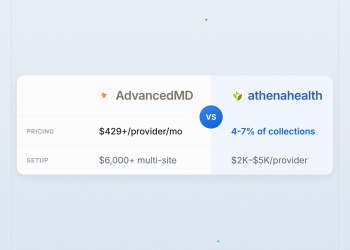
The pricing for athenahealth generally begins at $140 per month per provider and uses a collection-driven pricing model. This means that the software fees are calculated as a share of the practice’s collected revenue, rather than a fixed monthly fee. The collections fee is generally 4-7% of the practice’s revenue, so the cost of the system is really a function of how much a practice bills, not how many providers it has. Industry analysis shows that if your practice collects less than $800,000 a year, athenahealth almost certainly costs more than competing platforms because the award-winning KLAS recognition the vendor touts is earned mostly by practices that employ 11 to 75 physicians. That maths doesn’t work in your favour very often for a really small office.
AdvancedMD
AdvancedMD pricing is per provider per month. Any clinician at the mid-level or above is considered a provider. Medical speciality plans range from $429-1,070 per provider per month, and mental health plans start lower at $130-399 per provider per month. Practices with lower claims volume can choose to go with encounter-based pricing, where the bundled practice management and EHR pricing runs between $1.08 and $2.17 per claim, a model AdvancedMD says it works for practices generating around 250 to 500 claims a month. Customers who purchase more than one product can bundle EHR, practice management and patient engagement software and save up to 40 percent versus buying the products separately.
Kareo (now Tebra)
Tebra has tiered pricing that is more transparent than most EMR vendors in this category. Monthly cost ranges from $49-$799 per provider/month depending on whether you go for a single solution or a full platform bundle. Tebra is subscription-based pricing (not a percentage of collections like athenahealth), so your monthly cost stays predictable and doesn’t increase as your revenue grows. Tebra has low-volume pricing for practices with a low volume of claims (100 claims or fewer per month), for a very low-volume solo practice. The platform bundles physician-tier Practice Essentials at approximately $599 per provider, but other tiers such as non-physician and therapist are far cheaper.
EverHealth (DrChrono)
DrChrono is often quoted as being around $199/provider/month based on public 3rd party references and typical pricing for cloud-based EHR systems at the entry level. One plus for small practices on a tight-upfront budget: The vendor includes implementation and training in the subscription price, which most competitors charge separately for — sometimes saving $2,000 to $5,000 for vendor-led setup. It was CEHRT certified in 2015 and has been named Black Book’s #1 Mobile EHR from 2013 through 2026, which is important for providers who do a lot of charting on a tablet or phone.
eClinicalWorks
eClinicalWorks begins at a price higher than most of the names on this list. The EHR Only plan costs $449 per provider per month, and the EHR with Practice Management plan costs $599 per provider per month. RCM as a Service is available for 2.9% of practice collections for practices that want billing handled externally. The vendor’s own feature set covers 40+ specialities, and includes ambient charting through its AI module. The tradeoff for a very small clinic: The per-provider rate is one of the highest here, and small teams may use a fraction of what they pay for given the depth of enterprise-style tools built into the platform.
Implementation Effort for Vendor
Setup timelines and fees vary more than most buyers anticipate going in. DrChrono includes training in its subscription, Tebra turns on core functions four to six weeks before launch, and eClinicalWorks implementation services typically cost $1,500 to $3,500/provider in addition to the monthly fee. athenahealth implementation fees are between 2,000-5,000 per provider, something to be aware of when a practice is looking at total first year cost versus just the advertized monthly rate.
| Vendor | Starting Price | Pricing Model | Best Fit |
|---|---|---|---|
| athenahealth | $140/provider/mo + 4-7% collections | Collections-based | 11-75 physician groups |
| AdvancedMD | 130-1,070/provider/mo by specialty | Flat per-provider or per-claim | Specialty practices, mid-size groups |
| Tebra | 49-799/provider/mo | Subscription, modular bundles | Solo to small independent practices |
| DrChrono | ~$199/provider/mo | Custom per-provider plans | Mobile-first solo and small practices |
| eClinicalWorks | 449-599/provider/mo | Flat per-provider, optional RCM at 2.9% | Growing multi-specialty practices |
Source: vendor pricing pages and Software Finder cost guides, 2026.
Cost of EMR Software for Small Practice 2026 How Much Does
Entry pricing across the vendors we looked at is about $49-$599 per provider per month before implementation, training and add-ons like AI note generation or extended lab integration. So a three-provider practice on athenahealth that’s collecting $50,000 a month would be paying about $2,400 to $3,900 per month, once you factor in the collections fee on top of the base rate — a very different figure than the headline $140 starting price might suggest. That gap between the advertized price and the actual monthly price is the biggest reason small practice buyers should ask for an itemised quote before signing on, rather than just comparing starting prices across vendor websites.
Frequently Asked Questions
What’s the best EMR for a solo practice?
If you’re a solo practice, Tebra and DrChrono are generally the better fit. They both have lower entry-level pricing and quicker setup than enterprise-style platforms. The EHR Starter plan is $99 to $199 per provider per month and includes one solution. Instead of charging separate setup fees, implementation and training are included in the subscription for DrChrono.
What is the cost of EMR software for a small practice?
Small practice EMR pricing is generally $99-$599 per provider per month depending on vendor and bundle. athenahealth uses a percentage-of-collections model starting at around $140 per provider plus 4 to 7 percent of revenue. eClinicalWorks charges a flat $449 per provider per month for EHR only, so it’s the total first year cost that matters more than the sticker price.
Can Small Practices Afford a Cloud Based EMR?
Yes, cloud-based EMR platforms are often cheaper upfront than legacy, server-based systems because they remove the need for hardware purchases and large IT staffs. Cloud-based Tebra, DrChrono and AdvancedMD offer monthly pricing per provider, so a one or two-provider practice can start small and add modules as patient volume grows.
Is athenahealth good for small practices?
athenahealth is more geared toward groups of 11 to 75 physicians rather than solo or two-provider offices, since athenahealth’s 4 to 7 percent collections fee is based on revenue, not practice size. Athenahealth will usually pay more for a practice that generates less than $800,000 in annual revenue than flat-rate competitors.
What should a small practice look for before signing an EMR contract?
Before signing, make sure to confirm the pricing model (flat per-provider versus percentage of collections), contract length, implementation and data migration fees, and whether the vendor signs a BAA for HIPAA compliance. Buyer forums often contain EMR complaints about extra charges for AI notes, telehealth or claims volume not part of the advertized starting price.