Small practices are actually losing money when a HIPAA audit finds a missing risk assessment or an expired training record. As a solo practice, you will usually pay between $500 and $1,200 a year to stay HIPAA compliant, depending on the low-cost compliance software you use. But, if you choose the wrong software, you could still have gaps that an auditor will see.
Choosing the best HIPAA compliance software means balancing three things: a guided HIPAA risk assessment tool, staff training that tracks completions, and support if the Office for Civil Rights ever comes knocking. Few vendors can do all three equally well, and pricing models vary enough that a side by side comparison matters before you sign a contract.
Here’s a look at seven platforms designed for or adaptable to small practice budgets, with pricing pulled from vendor sites and independent review platforms as of 2026.
The HIPAA Compliance Software Small Practices Really Want
Buyers posting in practice management forums usually ask the same three questions before they settle on a tool: can it do the required Security Risk Analysis without hiring a consultant, does it track staff training automatically, and will it hold up if OCR ever asks for documentation.
For practices without a dedicated compliance officer, bundled compliance software platforms that consolidate HIPAA tasks such as risk assessments, policy management, BAA tracking and employee training into one platform are generally better than point solutions.
Small practices can find plans as low as $39 per month, but most full-featured platforms built specifically for healthcare are closer in the $99 to $250 per month range once risk assessment and training are both included.
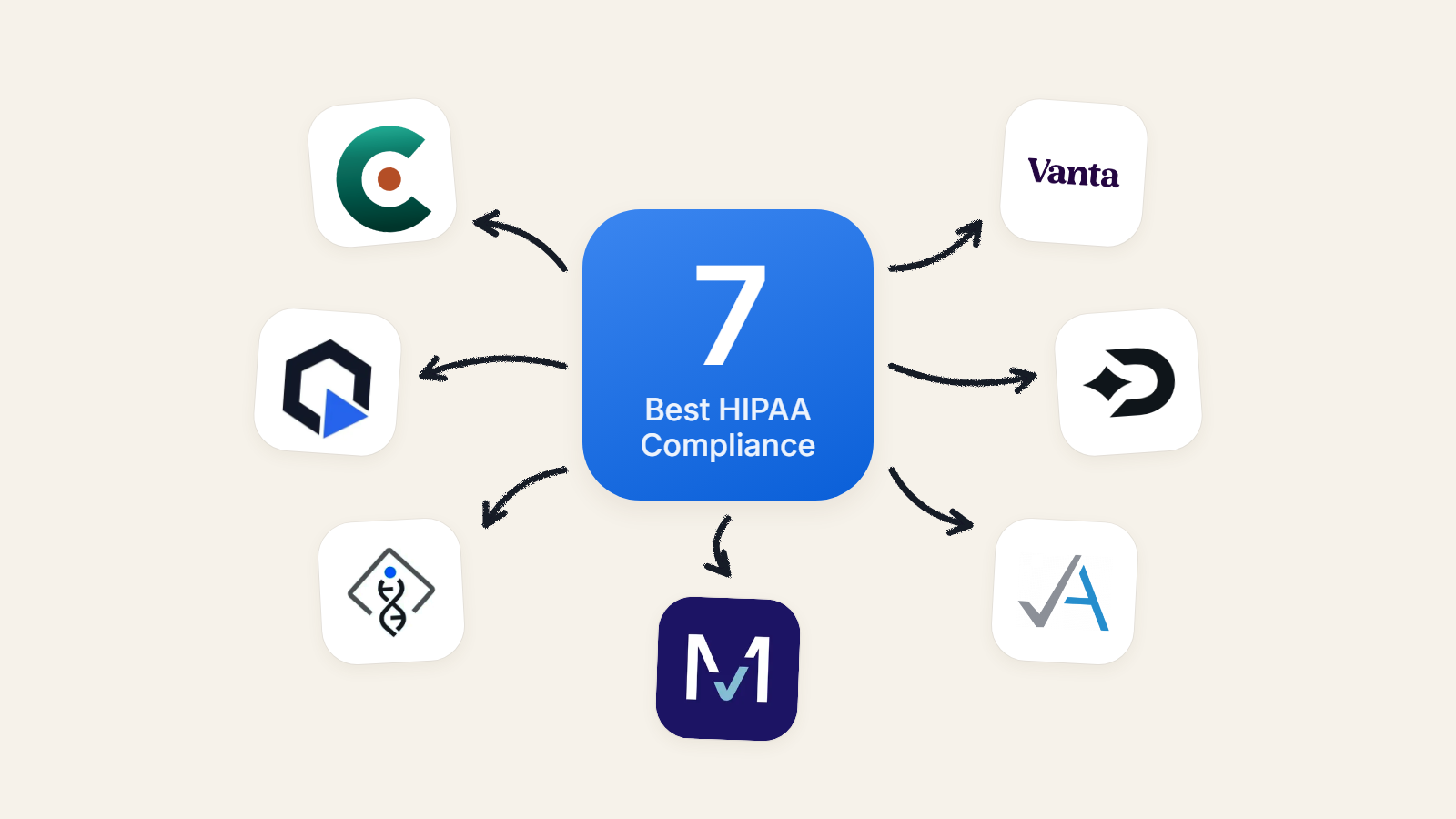
7 Best HIPAA Compliance Software for Small Practices in 2026
1. Compliancy Group
The Foundation plan from Compliancy Group is priced at $99 per month and is designed for small practices or businesses that want a streamlined, HIPAA-focused compliance solution. It includes policy and employee attestation management, security and privacy policy manuals, an employee training module and essential trainings covering HIPAA, FWA, OSHA, BBP and cybersecurity. Risk assessment is an add-on from the Foundation tier, but is built-in from the Growth tier ($149 per month, plus per-employee fees).
The platform’s audit support is a highlight. Compliancy Group provides customers with a HIPAA Seal of Compliance and an OCR Audit Response Program that prepares you for a government audit if one ever comes. The tradeoff is cost creep: A loaded Growth plan with incident management and the advanced program library add-on can run close to $947 a month before employee fees, according to one 2026 vendor comparison. Best for practices that want a named compliance coach, not just online self-service software.
2. Accountable.
Accountable markets itself as a bare-bones solution for practices wanting self-service compliance management without a long sales cycle. It is a cloud-based compliance and risk management software for healthcare practices of all sizes, helping users manage HIPAA compliance, policies and procedures, HIPAA training, risk assessment and business associate agreement tracking.
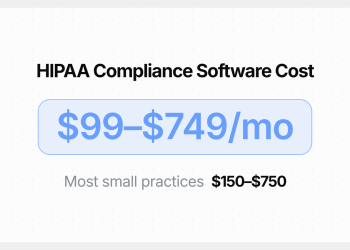
Pricing starts at $99 per month flat rate, but the wider per user models reported elsewhere push costs up to $749 per month depending on practice size and modules selected. Coaching is the difference compared to Compliancy Group. Accountable is self-service orientated, so practices lacking internal compliance knowledge may require more hand-holding than the platform provides out of the box.
3. Intraprise Health (HIPAA One)
HIPAA One by Intraprise Health – The risk assessment is the primary feature, not training or policy management. Its cloud-based HIPAA One compliance software is designed to simplify and automate HIPAA compliance for healthcare providers, health plans and business associates of all sizes, with solutions including security risk assessment, privacy and breach risk assessment, HIPAA workforce training, business associate management and third-party validation. The track record is the value proposition here.
The platform has 10,000+ assessments performed and 100% OCR acceptance listed. A related enterprise page says that it’s trusted across 10,000+ HIPAA assessments with a 100% OCR acceptance rate. This makes it a good fit for practices that want a NIST-mapped risk assessment they can hand straight to an auditor, even if its larger product line is aimed more at hospitals and health systems than at solo practices.
4. Vanta
Vanta’s a multi-framework compliance automation platform, not a HIPAA-only tool, and that distinction is important for small practices.” Vanta is a compliance automation solution that helps companies get and stay compliant with certifications including SOC 2, ISO 27001, HIPAA and GDPR. The pricing reflects that scope: reported purchase data shows a median of $20,000 across 370 recorded purchases, with a low near $7,500 and a high near $57,120, with enterprise scope running past $80,000, priced by headcount, frameworks and add-ons.
That price tag makes Vanta out of reach for most solo and small practices unless HIPAA compliance is a secondary concern behind a SOC 2 requirement, which is often the case for digital health startups rather than traditional clinics.
5. Drata
Drata competes directly with Vanta on multi-framework automation and is similarly priced. Drata is a security and compliance automation platform that continuously monitors and collects evidence of a company’s security controls, while streamlining end-to-end compliance workflows to ensure audit readiness, and supports HIPAA as well as SOC 2, ISO 27001, GDPR, PCI DSS, and other frameworks.
Drata works with cloud providers like AWS, identity management tools like Okta, and version control systems like GitHub to automatically gather and verify data from across an organization’s tech stack. The average pricing is comparable to Vanta, with the middle value at roughly $24,601 and the bottom value at roughly $9,613 across all recorded purchases. Drata is also a better fit for tech-focused business associates than for a small independent practice with a tight budget, like Vanta.
6. Abyde
Abyde is often seen in small practice comparisons as an automation-oriented, practice-oriented choice but pricing is not published and requires a sales call. It broadly covers risk assessment, policy creation and training, in a format aimed squarely at independent providers, not enterprise health systems.
7. MedTrainer
In addition to basic compliance documentation, MedTrainer also makes the list of small practices for its focus on training and credentialing the workforce. It’s more suited to practices that have staff training compliance as their biggest pain point, and HIPAA risk assessment support is really layered in, not the focus.
What is the Cost of HIPAA Compliance Software for a Small Practice?
The cost can be quite variable, depending on whether you want just a documentation platform or one that includes security operations, as well. HIPAA compliance software prices vary by the size of your practice. Entry-level documentation platforms cost around $99/month. Enterprise consulting-led platforms can cost $5,000/month or more. Most small-to-mid healthcare practices spend between $100-$1,500/month, depending on whether you need documentation only or documentation and security operations.
| Vendor | Starting Price | Best For |
|---|---|---|
| Compliancy Group | $99/month | Dedicated compliance coaching |
| Accountable | $99 to $149/month | Self-service small practices |
| Intraprise Health (HIPAA One) | Contact for pricing | Deep risk assessment accuracy |
| Vanta | ~$10,000/year | Multi-framework tech companies |
| Drata | ~$9,600+/year | Enterprise scaling across frameworks |
Source: vendor and third-party pricing pages, 2026.
Frequently Asked Questions
Which HIPAA compliance software is ideal for small practices?
For every practice, there isn’t a single optimal choice. Because they combine a HIPAA risk assessment, policy templates, and staff training into a single monthly charge starting at about $99, Compliancy Group and Accountable are well-liked by small practices. Vanta or Drata are typically used by practices that also require SOC 2 or ISO 27001, such as digital health startups.
Do I require a different HIPAA risk assessment and training tool?
Usually not. The majority of platforms designed for small practices, including as Compliancy Group, Accountable, and Intraprise Health’s HIPAA One, combine BAA tracking, policy management, training, and security risk assessment into a single subscription. To comply with the HIPAA Security Rule, a written risk assessment is still required, even with standalone training-only technologies.
Which software for HIPAA compliance offers audit support?
If an auditor requests it, Compliancy Group provides an OCR Audit Response Program and a HIPAA Seal of Compliance that attests to your due diligence. HIPAA for Intraprise Health On completed assessments, one indicates 100% OCR approval. In HIPAA, SOC 2, and other frameworks, Vanta and Drata provide audit hubs where you can easily share evidence with external auditors.
For a small practice, how much does HIPAA compliance software cost?
Depending on regions and add-ons like risk assessment or incident management, entry-level platforms designed especially for small offices often cost between $99 and $249 per month. Built primarily for tech firms that also require SOC 2, multi-framework systems like Vanta and Drata usually start closer to $10,000 annually, which is more than most small practices need to spend.
Is official HIPAA certification available for any HIPAA compliance software?
No. No vendor can genuinely claim a HIPAA certification as there isn’t an established government organization. A Business Associate Agreement (BAA) should be signed by all suppliers handling protected health information, and companies such as Compliancy Group give a Seal of Compliance or attestation badge that attests to your completion of their program.