When clinics compare Tebra and Zocdoc, they’re usually solving two separate problems simultaneously: how to manage a daily schedule without double entry, and how to bring in new patients. That mismatch is the whole story here in this comparison.
Tebra is a practice management and EHR suite that has scheduling built in with charting and billing. Zocdoc is a marketplace that patients use, sits on top of whatever system a clinic uses today, and only charges when it brings in a new patient.
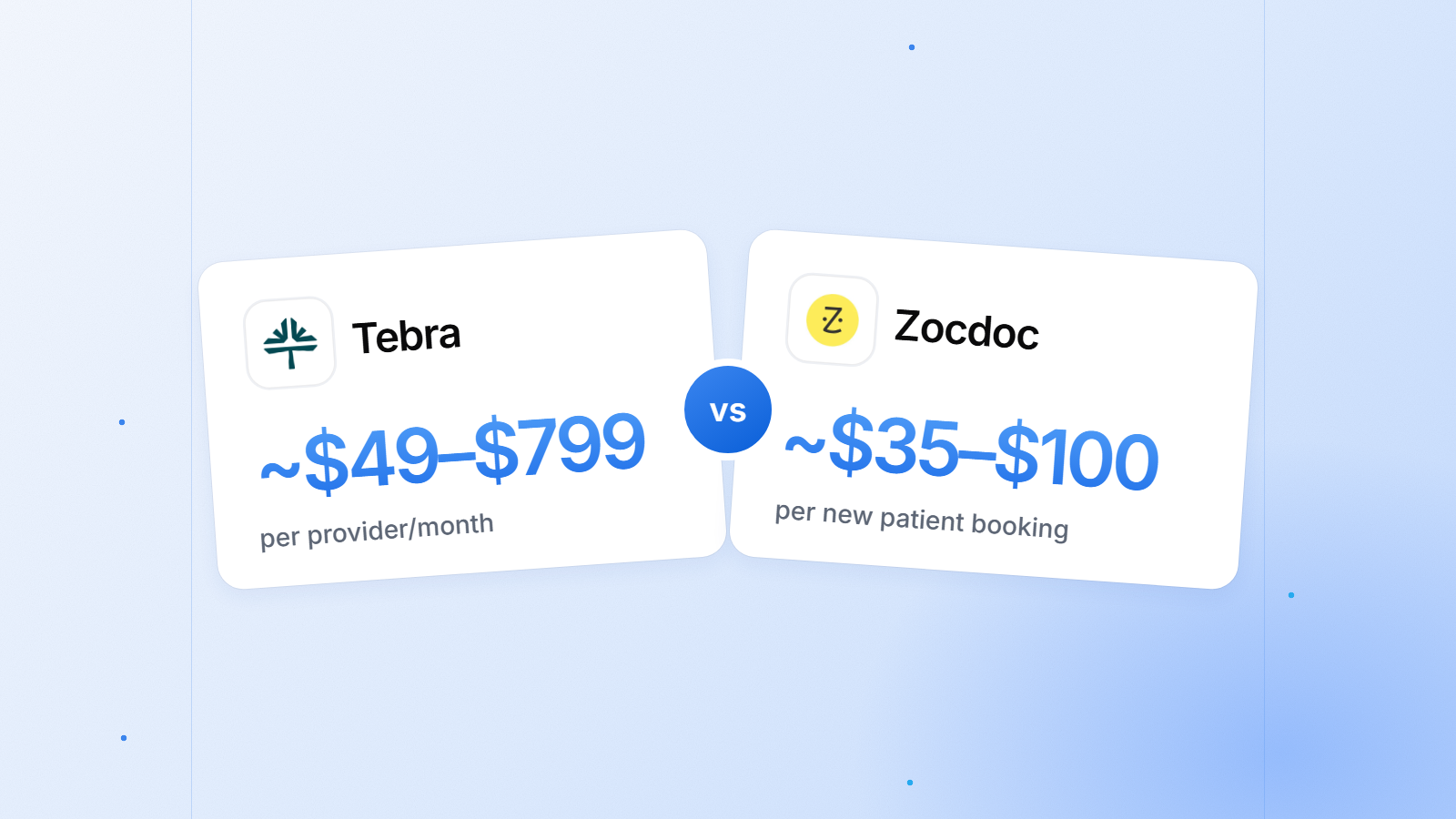
Tebra is a full EHR and billing platform that incorporates scheduling into a provider’s clinical workflow, and it costs between about $49 and $799 a month per provider. Zocdoc is a free-to-use patient-facing booking marketplace that uses practice tools and charges only a per-new-patient booking fee, typically between $35 and $100 depending on specialty.
Here’s a breakdown of how the two actually compare against each other in terms of cost, features and what type of practice each is best for, plus where NexHealth fits in as a third option for clinics considering all three.
Tebra vs Zocdoc Scheduling: The Basic Difference
Tebra’s scheduling tool is a component of a broader EHR and billing suite built on Kareo and PatientPop. In Tebra, scheduling is linked to the patient chart, so when a provider books a visit, that appointment already has insurance, history, and billing context.
Zocdoc is not the same. “It started as a directory and booking marketplace and Zocdoc still does that today. For clinics, Zocdoc has two layers: free Practice Solutions tools for your existing patient base, and a Marketplace listing that charges a fee only when it books a new patient.
Existing Patients vs New Patients How Each Vendor Handles
Within the same record system, all patients are treated equally, whether they are new or returning. Zocdoc is a split the two. Zocdoc allows patients to book for free, while providers can use free scheduling tools for all of their patients, and the Marketplace listing is a paid option to acquire new patients. That matters because a practice that isn’t actively trying to grow its patient volume gets less value from Zocdoc’s paid side.
The True Price of Tebra Scheduling Costs
Tebra does not reveal a flat number. Tebra pricing is custom-quote only, ranging from about $149 to $499 per provider per month, plus AI-note, EPCS and processing fees, although Tebra’s own pricing overview quotes a broader range of $49 to $799 per provider per month, depending on modules selected.
In addition to the subscription, Tebra also charges about $75 per provider for EPCS setup, $500 per facility and about $50 per user per year for PDMP integration, plus a $150 per month minimum for accounts without an active provider. There is an additional payment processing fee of 2.75% to 3.25% plus $0.30 per transaction.
Software Finder’s own vendor profile lists Tebra pricing from $99 to $399 per provider per month, with onboarding fees of about $500 per provider and implementation fees of $1,000 to $20,000, depending on the complexity of the practice.
Zocdoc for Clinics: The Actual Costs
Zocdoc turns the pricing model on its head. Zocdoc’s Practice Solutions, which include online scheduling, intake reminders and video service, are free for providers to use, and the Marketplace is free from any upfront or fixed monthly fees, only charging a fee when a new patient books their first appointment.
That per-booking fee varies by specialty. A review found a California psychotherapist charges $70 for every new client booking, but the fees in older fee structures cited by practice owners ranged from about $35 for primary care bookings to as high as $100 for specialist bookings.
| Factor | Tebra | Zocdoc |
|---|---|---|
| Pricing model | Per-provider monthly subscription, $49 to $799 | Free tools, pay per new patient booking |
| Scheduling tied to EHR | Yes, built into Tebra Clinical and Patient Experience | No, syncs with existing EMR calendar |
| Best fit | Practices wanting one system for charting, billing, scheduling | Practices keeping a current EMR and wanting new patient volume |
| New patient acquisition | Not a core focus | Core focus of the Marketplace |
| Free trial | Not offered, per G2 pricing data | No free trial, but free practice tools |
Source: Software Finder, Pabau, Zocdoc, G2, 2026.
Scheduling Features: What Buyers Actually Use Day to Day
Tebra offers a patient portal and mobile app for convenient access to health information, appointment scheduling, secure messaging with providers, and bill pay, all inside the same login providers already use for charting. That reduces the number of systems front desk staff have to touch per visit.
Zocdoc leans on its marketplace visibility. Patients filter by insurance, specialty, and location, then book from a live calendar. Included with a Zocdoc profile for free is the ability to import all appointments to your scheduling system, automated requests for client intake information, and an online booking button widget for your website.
Where NexHealth Fits Into This Comparison
NexHealth falls in-between the two models, and clinics comparing Tebra to Zocdoc tend to also include NexHealth. NexHealth is more about real-time two-way sync between an existing EMR and online booking, more in line with how Zocdoc integrates, versus Tebra’s all-in-one structure, but without the marketplace directory piece.
Who should pick which tool practices
Tebra usually wins out for a small practice looking to replace paper charts and spreadsheets with one system, because scheduling, billing and documentation live in the same database. “The fee only applies when that growth actually happens, so a practice that already has a working EMR but wants more new patients walking in the door tends to get more value out of Zocdoc’s Marketplace.
Sometimes you have multi-location groups where they are using a Tebra or other EMR internally but have a Zocdoc listing on top of it just for patient acquisition. That is common enough that Zocdoc’s Practice Solutions are designed to sync with outside systems, not replace them.
FAQ
Is Zocdoc free for clinics to join?
Zocdoc’s core practice tools, such as online scheduling, digital intake, and appointment reminders, are available to providers at no cost. The Marketplace listing that brings in new patients has no upfront cost or subscription cost either. Clinics are charged only when a new patient books their first appointment on Zocdoc, not for existing patients or repeat visits.
Does Tebra have self-scheduling online?
Yes. Tebra offers online self-scheduling as part of its Patient Experience module, which also includes the patient portal, appointment reminders, and secure messaging. Scheduling is built into the same system as the EHR and billing. Appointments sync directly with charting and claims—no separate integration step.
Which tool integrates better with an existing EMR system?
Tebra is built as a single EHR and billing suite, so scheduling, charting, and claims already share a single database with no integration required. Zocdoc is built to sit on top of whatever EMR a practice uses, syncing calendars through its Practice Solutions tools, making it a good fit for clinics that want to keep their current EMR and add a patient acquisition layer.
Tebra Scheduling Pricing: How Much Does It Cost?
Tebra doesn’t offer any flat rates. Pricing breakdowns from multiple sources show Tebra costs $49 to $799 per provider per month depending on the modules a practice opts for, with bundled quotes usually ranging from $149 to $499 per provider per month. There are add-ons for EPCS setup, PDMP access and payment processing fees in addition to the subscription fee.
Zocdoc: is it better for clinics or solo providers?
Zocdoc works for both, but its per-booking fee model means the economics change depending on patient volume and specialty. Zocdoc Practice Solutions is free for larger clinics with multiple providers and can be used for the entire patient base. Marketplace booking fees are only for new patient acquisition and are scalable to any size clinic.