In 2026, most dental groups are choosing between Curve Dental vs Denticon for cloud-based practice management software. Both are 100% browser-based, both promise to cut server costs, and both are recommended ad nauseam on dental Facebook groups and Reddit threads. But they are designed for different sized practices and picking the wrong one could mean paying for features never used by a single location office.
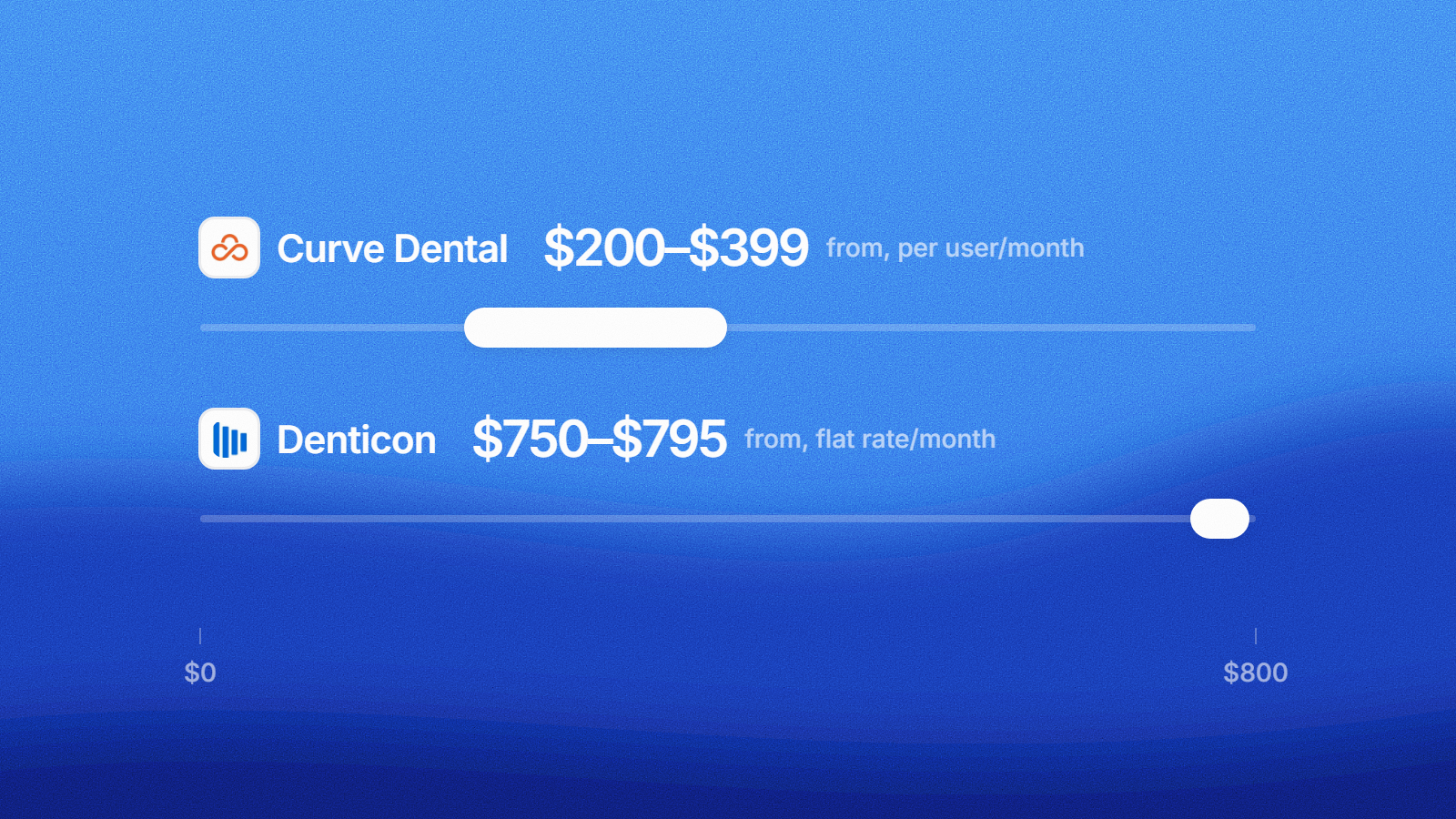
Curve Dental is priced between $200 and $399 per user per month and is aimed at single to mid-size dental practices. Denticon is priced at a flat rate of between $750 and $795 per month and is aimed at DSOs and multi-location groups that need centralized reporting, shared patient records and automated RCM across sites.
Office managers who check out both platforms ask the same three questions in forums: Which one has multi-location reporting without additional add-ons? How much is the imaging? Which one is cheaper? Which is easier to migrate to from an older server-based system? This guide provides you with sourced pricing and feature data to answer all three.
Curve Dental vs Denticon: Quick Comparison Table
| Feature | Curve Dental | Denticon |
|---|---|---|
| Starting price | $200 to $399 per user/month | $750 to $795 flat rate/month |
| Best for | Solo and small group practices | DSOs and multi-location groups |
| Deployment | Cloud-native, browser-based | Cloud-based, browser-based |
| Imaging | Included in higher tiers (SuperHero) | Built-in imaging and x-ray support |
| Multi-location reporting | Limited compared to DSO tools | Centralized, network-wide reporting |
| Free trial | Not available | Not available |
Source: Capterra, SelectHub, Software Advice, 2026.
How Much Curve Dental Pricing Actually Costs in 2026
One analyst estimate has the starting at $99 per user, per month, but other sources mention higher entry points. Another review snapshot shows a starting price of $200/month with a Basic plan at that price billed monthly.
Some comparison sites provide a larger number in the per user model. A single user will pay around $399 per month, 10 users will cost around $1,999 and it goes up to around $14,999 for 100 users. Implementation typically adds $500 to $2,000, depending on how complicated the setup is.
A review of Curve’s tiered structure in 2026 found an alternate pricing route based on location, not the number of users. Curve SuperHero is $350 to $500 a month, with the price per location dependent on practice size and whether cloud hosting is included. That review also noted that imaging is critical to most practices, which drives most buyers to the SuperHero tier for the full experience.
The difference between the figures
Curve Dental does not publish a single price list. Instead it quotes by practice size, number of providers and if imaging is bundled in. Hence the reason why third-party trackers show a starting point anywhere from $99 to $500. Each of the above numbers should be thought of as a range to plan around, not a locked quote, and buyers should confirm final pricing on a live demo call.
How Much Does Multi-Location Group Denticon Cost?
Denticon is more consistent across sources than Curve Dental, likely because its parent company Planet DDS lists a figure in a product FAQ rather than hiding it entirely. Denticon starts at $795 per month.
Other review sites quote a slightly lower entry point. Denticon is listed by Software Advice at $750 per month, flat rate. Capterra confirms the $750 flat rate, per month, with no free trial.
Denticon’s pricing is a flat rate that scales with contract terms (not headcount), compared to Curve’s per-user model. Pricing transparency is a differentiator in this market: Open Dental and Denticon have published entry points, whereas incumbents like Dentrix, Eaglesoft and Curve Dental work on a quote-based model. That said, enterprise DSO deals are still done on a one-to-one basis. The bigger lever for a multi-location group is whether the vendor offers an enterprise agreement, because a custom DSO tier is negotiated, not published, but prepaying may result in a 5 to 15 percent discount, depending on term length.
What you get for that price with Denticon
The flat rate includes more than just scheduling basics. The platform enables insurance eligibility through claims, payments, and financial reporting for revenue cycle workflows so teams can manage claim submissions, payment posting, and patient billing across locations while bringing all RCM info together for a more transparent view of what’s left to do.
Cloud Dental Software Imaging and Multi-Site Reporting Comparison
When buyers ask questions about imaging on Reddit and Quora dental practice threads, they’re generally asking if they can do without an imaging system entirely. For Denticon the answer is leaning yes. Denticon is a robust cloud-based practice management system that provides core features such as appointment scheduling, patient records management, charting, billing and customizable reporting. Unique differentiators include multi-location support, third-party integrations and automatic backups to help practices manage patients, schedules and financial data across multiple offices.
Reviewers note some friction on the integration side. Denticon is a cloud-based platform that works well with common dental tools, especially for multi-location practices requiring remote access. Many offices cite integrations for imaging, patient communications, payments, and insurance workflows, while some teams mention occasional bugs or reliance on the internet.
“Curve Dental doesn’t bundle imaging everywhere, it takes a tiered approach. Imaging access usually lives in cloud hosting and updates, and that’s included in the SuperHero plan ($350-$500/month). It’s worth clarifying tier inclusions before signing as practices on the lower Hero tier may need to add imaging separately.
Size of Practice for Each Platform
Solo and small group practice
Curve Dental probably falls here. Best for practices that want hassle-free cloud software with minimal IT burden, as Curve takes care of all updates, backups and maintenance automatically with nothing to install or manage locally and is a good fit for offices that want to focus on dentistry rather than technology.
Dental groups and DSOs with multiple locations
This use case is what Denticon is built around. It is a practical option for DSOs and growing dental groups who need more consistent operations across multiple locations, particularly organizations that manage shared patient data, reporting, and centralized workflows at scale. The company also handles large-scale enterprise conversions such as its reported rollout across more than 80 locations of Park Dental Partners.
Groups still deciding on mixed size
Others are in the middle, with three to five locations and plans to grow. For these shoppers, reporting depth is usually more important than price. Today’s leadership needs one dashboard for every site, and Denticon’s consolidated model saves time. If growth is still a year or two off, Curve’s lower entry cost may make more sense in the short term.
Known Complaints, Reviews and Support
The differences in review sentiment between the two platforms are telling. Denticon users generally like its user-friendliness and centralized access, but they repeatedly cite downtime and support responsiveness as areas of concern. Recent updates to the platform have included DentalOS AI Agents, which are intended to improve patient outreach and scheduling efficiency.
Curve Dental tends to earn higher support scores on third-party review aggregators. One source lists a 4.6 rating on G2, based on 160 reviews. Fast phone support is often mentioned as a plus, per a 2026 comparison report. Buyers evaluating both should ask each vendor directly about current support SLAs as review-site scores change from year to year.
Frequently Asked Questions (FAQ)
Which is better for multi-location practices, Curve Dental or Denticon?
Denticon is the better option for multi-location practices and DSOs because it brings together patient records, billing and reporting for all locations in one database. Curve Dental is excellent for a single practice or small multi-site practices, but it was not built with the same DSO-level centralization as Denticon.
How much does Curve Dental cost vs Denticon?
Curve Dental pricing starts at $200 to $399 per user per month, depending on the source. Denticon has a flat starting rate of $750 to $795 per month. Denticon’s pricing is based on a per location cost, which is intended for group practices and scales differently than Curve’s per-user pricing.
Yes, Denticon is cloud-based imaging.
Yes, Denticon includes imaging and x-ray integration into its cloud platform, plus billing, medical records and the ability to share data across multiple locations. Reviews say it integrates with common imaging tools, though some teams report the occasional integration bug.
What is Curve Dental famous for?
Curve Dental is a cloud-native practice management and EHR platform for solo and small group dental practices that want minimal IT overhead. And updates, backups and maintenance are done automatically. There are tiers like Hero and SuperHero to access imaging.
Curve Dental vs Denticon: Which One Is More Transparent in Pricing?
Denticon offers a starting price on third-party review sites — usually $750-$795/month — while Curve Dental often requires a demo for exact quotes, with third-party estimates ranging from $200-$399/user/month. Neither vendor gives full pricing on its own website.