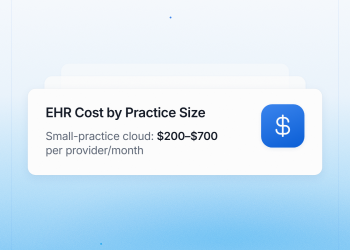
When small practices begin shopping for an EHR, they often find themselves comparing Practice Fusion and athenahealth, two platforms built for very different budgets and workflows. Practice Fusion, now owned by Veradigm, charges around $199 per provider, per month, while athenahealth charges a lower starting rate of around $140 per provider, per month with an added fee of 4% to 8% on collections. For a solo or small practice watching every dollar, that structural difference is more important than feature checklists.
Buyers on forums like Reddit often ask if Practice Fusion is still worth it now that it’s owned by Veradigm or if athenahealth’s billing-included model is actually saving money as collections increase. This manual will walk you through pricing, features and fit so you can answer that question for your own practice.
Both vendors serve ambulatory practices, but are not interchangeable. Practice Fusion is built for solo and small independent practices that want predictable software costs. athenahealth likes practices that want revenue cycle management even if it means month-to-month fees that can vary.
Practice Fusion vs athenahealth: Cost Comparison 2026
Practice Fusion killed its ad-supported free model in 2018. The free version was replaced with a paid subscription model in early 2018, ending over a decade of ad-supported access. Today the platform runs as a simple subscription.
Pricing is $199/month per provider with an annual commitment. 3 signing staff licenses included with unlimited non-signing staff. E-prescribing of regular and controlled substances, charting, scheduling, labs, imaging, patient portal and MIPS reporting are also included. The same vendor listing also mentions a two-week free trial with no credit card required.
athenahealth is not like that. It uses a collections-based pricing model, where fees are a percentage of practice collected revenue rather than a flat monthly fee. Third-party industry benchmarks indicate pricing of roughly $140 per provider per month plus an additional 4% to 8% of monthly collections.
That percentage adds up quickly for busier practices. The 4-7% of collections model, which aligns incentives for small practices, becomes a major expense for high-revenue practices: a practice collecting $3 million per year at a 5% rate pays athenahealth $150,000 per year, more than flat-rate competitors.
| Factor | Practice Fusion | athenahealth |
|---|---|---|
| Starting price | $199/provider/month | ~$140/provider/month plus 4-8% of collections |
| Pricing structure | Flat subscription, annual commitment | Collections-based, variable |
| Owner | Veradigm (formerly Allscripts) | Independent, athenaOne platform |
| Best fit | Solo to small practices, 1-10 providers | Small to mid-size groups, 11-75 providers |
| Free trial | Yes, 2 weeks | No |
Source: Software Finder vendor research, 2026.
Hidden Costs to Watch
The headline price from neither vendor tells the whole story. Third-party clinical content and terminology subscriptions for Practice Fusion are typically billed annually and can cost anywhere from about $300 to $1,500 per provider, plus AMA CPT code licensing fees that typically run in the $20 to $50 per clinician per year range, plus hosting fees that are generally estimated to be $150 to $600 per provider per month if the environment is hosted by Veradigm.
First-year bill for athenahealth covers implementation, training as well. Implementation costs, like moving up to 1,000 patient records and two staff training sessions, can add another $1,000 to the initial costs. For larger deployments the implementation fee can be much higher, depending on the scope.
Feature Comparison: Charting Billing & Patient Tools
Practice Fusion’s feature set is purposely slim. It covers the basics: charting, e-prescribing, scheduling, lab and imaging integration, a patient portal and MIPS reporting. Base plan includes: ONC 2015 Cures Update certified, DEA EPCS certified, and Surescripts ePrescribing.
athenahealth adds more to its core, especially related to billing. In 2026, athenahealth launched athenaAmbient, its native ambient documentation solution, at no additional cost to all athenahealth customers, and it’s a great choice for practices looking to reduce manual note-taking.
Practice Fusion
Best for solo and small ambulatory practices seeking predictable costs and a short learning curve.
athenahealth
Best for practices that want billing and collections support built into the platform in exchange for accepting variable fees.
eClinicalWorks.
Worth comparing if neither Practice Fusion nor athenahealth fits, especially for practices wanting more specialty-specific templates.
Who Owns Practice Fusion and athenahealth in 2026
Ownership history is important to assess long-term support. Ryan Howard launched Practice Fusion in 2005 in San Francisco alongside three co-founders, and Allscripts renamed itself Veradigm in 2022, with Practice Fusion running under that brand since. Allscripts closed the Practice Fusion acquisition on 13 February 2018 after agreeing a price of $100 million in cash, subject to adjustment.
Some buyers worry Veradigm might eventually sunset the product. Veradigm’s September 2026 investor deck plans to invest, sustain, or sunset and sell parts of its portfolio, but no sale or shutdown of Practice Fusion has been announced. That distinction matters for anyone treating Practice Fusion as a long-term platform rather than a short-term fix.
athenahealth, in contrast, is not tied to a parent legacy EHR brand, but is built on its athenaOne network. The platform runs on a network of more than 160,000 providers and won the 2026 Best in KLAS award for Ambulatory EHR among independent practices with 11 to 75 physicians.
Practice Fusion Alternative:
- When athenahealth or eClinicalWorks Makes More Sense
- Practice Fusion works well until a practice outgrows its lean feature set or needs deeper billing automation. At that point, athenahealth’s bundled revenue cycle tools can offset the higher percentage-based fee, particularly for practices with 11 or more providers where athenahealth’s KLAS ranking applies.
- eClinicalWorks is another popular alternative search that goes with both vendors, especially for multi-specialty groups that want more customisable templates than Practice Fusion offers, but don’t want to pay athenahealth’s collections-based pricing.
Frequently Asked Questions (FAQ’s)
Is Practice Fusion still free in 2026?
No. Practice Fusion dropped its ad-supported free model in early 2018 after Allscripts, now Veradigm, acquired the company. As of 2026, pricing starts at $199 per provider per month with a required annual commitment, though a free trial is still available.
How does Practice Fusion pricing compare to athenahealth?
Practice Fusion uses flat per-provider pricing starting at $199 a month, so costs stay predictable regardless of revenue. athenahealth starts lower at around $140 per provider per month but adds a 4% to 8% fee on collections, which can push total cost well above Practice Fusion for high-revenue practices.
Which is better for a solo practice, Practice Fusion or athenahealth?
Practice Fusion generally fits solo and small practices better because of its flat, predictable monthly rate and simpler setup. athenahealth can still work for a solo practice that wants built-in billing support, but its collections-based fee may cost more as revenue grows.
Does athenahealth or Practice Fusion include billing services?
athenahealth bundles revenue cycle management into its core pricing, with fees tied to a percentage of collections. Practice Fusion’s base plan covers charting, e-prescribing, and scheduling, with billing services available as a separate, quote-based tier.
Is Practice Fusion a good replacement for athenahealth?
Yes, for practices that want lower, fixed monthly costs and a simpler feature set. Practice Fusion is a common athenahealth alternative among solo and small ambulatory practices, though it lacks the collections-based revenue cycle tools and KLAS ranking athenahealth offers larger groups.