When rural hospital CFOs are evaluating TruBridge vs. Oracle Health, they’re actually weighing two very different bets: a vendor designed for small facilities, and an enterprise platform trying to regain trust after years of losses.
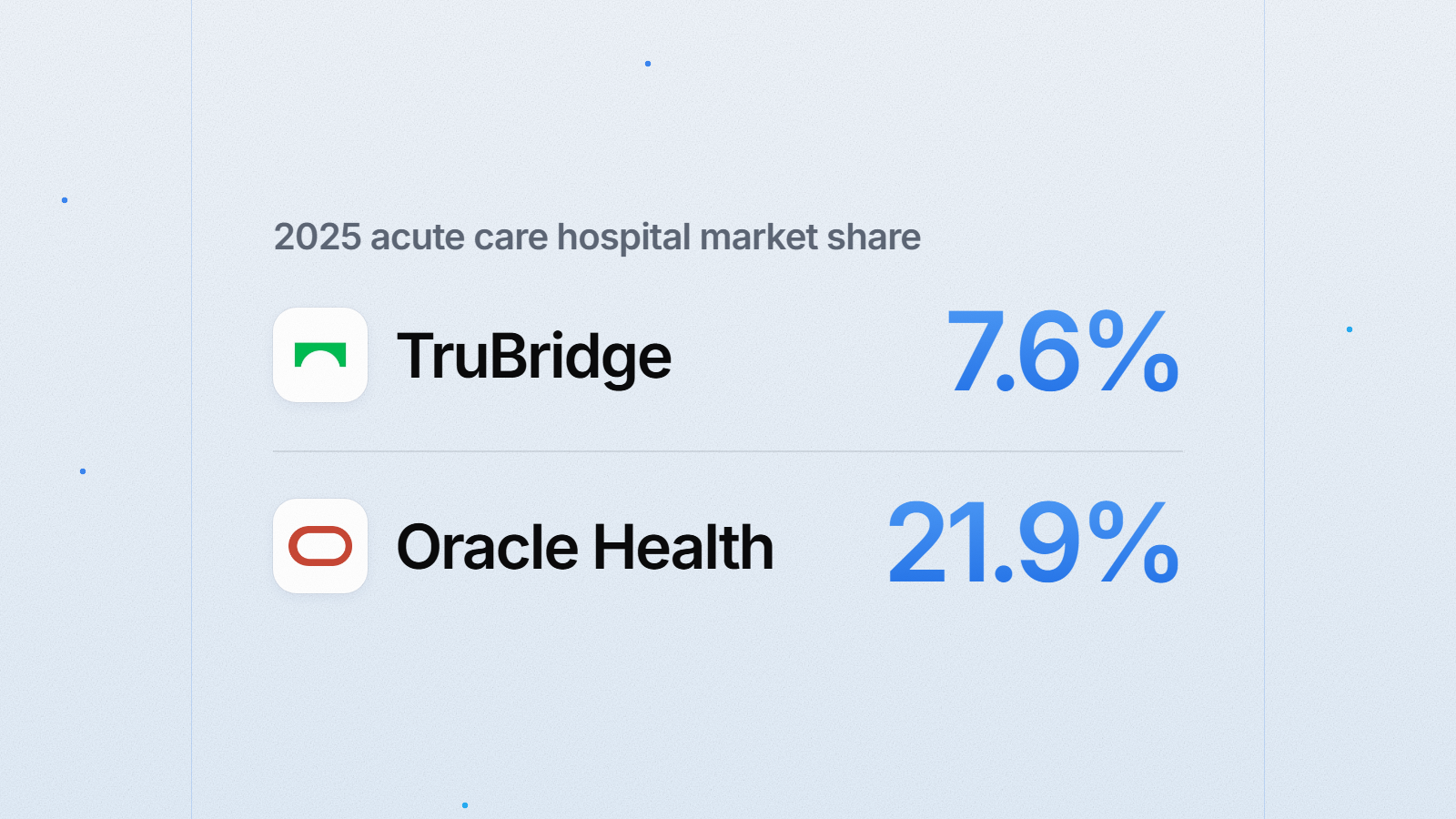
In most cases, TruBridge is a better fit for rural and critical access hospitals than Oracle Health. TruBridge provides a less expensive, single-vendor EHR and RCM stack to more than 1,200 small hospitals. Oracle Health has roughly 21.9% of market share in acute care hospitals in 2025, but it lost 56 hospitals that year and has enterprise pricing and implementation requirements that many critical access hospitals cannot support.
This comparison examines who each vendor actually wins business, what KLAS data says about satisfaction and which is more sense for a 25 bed critical access hospital vs a larger rural health system.
TruBridge vs Oracle Health: Quick Comparison Table
Before going deeper, here is how the two vendors stack up on the factors rural hospital buyers ask about most.
| Factor | TruBridge | Oracle Health |
|---|---|---|
| Typical target hospital | Rural, critical access, under 100 beds | All sizes, historically large health systems |
| 2025 acute care hospital market share | 7.6% | 21.9% of hospitals and 20.4% of beds |
| 2025 net hospital change | Not among top losers in KLAS reporting | Down 56 hospitals and 14,676 beds |
| Leader in 1-25 bed hospitals (KLAS category) | No | Yes |
| Core product origin | Formerly CPSI | Formerly Cerner Millennium, acquired by Oracle in 2022 |
| Client base size | 1,200+ rural/community hospitals and 3,300+ SNFs | Thousands of hospitals globally, enterprise-scale |
| RCM recognition | HFMA Peer Reviewed for 7 consecutive years | Not positioned primarily as an RCM specialist |
Source: KLAS Research / Becker’s Hospital Review, 2026.
How TruBridge Positions Itself for Rural and Critical Access Hospitals
TruBridge supports rural and critical access hospitals (CAHs), community and independent hospitals, and health systems serving underserved populations. The Mobile, Alabama-based company, formerly known as CPSI, delivers services to over 1,200 US rural and community hospitals and over 3,300 skilled nursing and senior care facilities.
Its integrated EHR, RCM and coding stack from a single vendor is meant to reduce interface and vendor-management overhead, which is relevant for a hospital with a three-person IT department. Third-party validation of TruBridge’s RCM track record. Its services have received HFMA Peer Reviewed designation for seven years running, a credential that conveys outsourcing credibility for under-resourced billing offices.
Where TruBridge Misses
There are complaints with the product. Reviewers say the user interface feels outdated, with some modules historically having run on DOS-based foundations, a steep learning curve with over a month before it feels natural to have the documentation, and reliability complaints around timeouts and freezing under load. KLAS also notes a data gap: TruBridge has a limited amount of public KLAS performance data because it hasn’t had enough live customers to be eligible for Best in KLAS ranking.
And there’s an ownership change coming down the pike. In April 2026, IKS Health said it would purchase TruBridge, including its EHR, RCM rural services, managed IT offerings and rural hospital client base. Buyers looking at TruBridge today should ask directly what that deal means for the product roadmap and support contracts.
Oracle Health Performance with Small and Rural Hospitals 2026
The story of Oracle Health in 2026 is twofold. KLAS however found Oracle Health to be the category leader in 2025 among standalone hospitals with 1 to 25 beds, indicating the platform does win some critical access deals. But the company’s overall trajectory has been a rocky one.
Oracle Health lost more market share than any other vendor tracked for the third consecutive year. It finished 2025 with 56 fewer hospitals and 14,676 fewer beds, with the biggest losses coming from small health systems. That is backed up by satisfaction data: About 30% of sampled Oracle Health customers told KLAS the platform is not in their long-term plans, and another 35% are considered vulnerable.
One caveat worth flagging to buyers: Oracle Health wouldn’t provide KLAS with a list of new contracts from first-time buyers, so KLAS used publicly available resources and internal research to tally wins. As such, the counts are estimates, particularly for smaller hospitals. That makes it harder to independently confirm how many critical access hospitals are existing Oracle Health customers.
Why Some Smaller Hospitals Stay with Oracle Health
A few critical access hospitals do decide to go with Oracle Health anyway, typically because they are already a part of a larger health system that has standardized on the platform, or because they are looking for Oracle’s cloud infrastructure and AI roadmap. Some customers with a long-term move to the platform in mind have expressed interest in features such as the Clinical AI Agent, Seamless Exchange and Oracle Cloud Infrastructure integration.
Cost & Implementation What can rural budgets realistically absorb
Neither vendor publishes list pricing publicly, so be wary of any specific dollar figures you see online for either platform. Yes, the difference in structure is verifiable: TruBridge was built with fewer beds, smaller staffing levels and a bundled model, while Oracle Health’s architecture was built initially for large health systems and then scaled down.
For either vendor, a rural hospital should request a line-item quote for implementation, training, interface fees and ongoing support, and compare that to projected RCM gains. TruBridge’s bundled RCM and coding services are designed to offset EHR costs over time, a model that appeals to hospitals wanting to avoid managing three separate vendor contracts.
MEDITECH: A Third Option for Rural Hospitals
Buyers looking into this decision should also be aware of a third name. In 2025, Meditech had 14.7% of the acute care hospital market share and was the leader in the standalone 26 to 200 bed hospital category in KLAS’s 2025 breakdown. Meditech is often competing with TruBridge and Oracle Health for a rural hospital just north of critical access size. Create a shortlist after viewing a Meditech profile.
Common Questions
“TruBridge works well for small and rural hospitals.
Yes. TruBridge was built specifically for rural, critical access and community hospitals and serves more than 1,200 of these hospitals across the U.S. KLAS researchers describe TruBridge as a good option for small hospitals trying to meet budgetary needs and its RCM services have been awarded HFMA Peer Reviewed status for seven consecutive years.
What is the TruBridge pricing vs Oracle Health?
While neither vendor publishes list pricing, TruBridge is marketed as the lower-cost option, packaging EHR, RCM and coding for smaller facilities with fewer beds and staff. Oracle Health’s enterprise architecture and implementation services typically require larger IT budgets than most critical access hospitals have.
Can a critical access hospital afford oracle health
It can happen, but it’s rare. In KLAS’s 2025 category breakdown, Oracle Health leads standalone hospitals with 1 to 25 beds, but the overall customer sentiment is weak: roughly 30% of Oracle Health customers sampled say the platform is not part of their long-term plans and another 35% are considered vulnerable.
What percent of hospitals does Oracle Health have today?
According to KLAS, Oracle Health had a 21.9% share of the U.S. acute care hospital market and a 20.4% share of beds at the end of 2025. That marked the third consecutive year that the vendor had the largest net loss of any tracked EHR vendor, losing 56 hospitals and 14,676 beds.
Does TruBridge have an EHR like Oracle Health’s Millennium platform?
TruBridge’s EHR (formerly branded Evident Thrive) is based on one patient record, built on a single architecture, compared to Cerner Millennium’s module-heavy design. It is not pitched as a feature-for-feature replacement to Oracle Health’s enterprise platform, but as a simpler system sized for hospitals of about 100 beds or fewer.